


General Grants
Browse our earlier grant listings for startups, charities and community groups.
920 links
-
Up to €100,000 for Women Entrepreneurs & Innovators – European Prize for Women Innovators 2027
The European Innovation Council (EIC) and the European Institute of Innovation and Technology (EIT) are offering cash prizes of up to €100,000 to recognise women entrepreneurs developing breakthrough innovations that benefit society, the economy and the environment.
The European Prize for Women Innovators 2027 celebrates exceptional women founders and leaders across Europe, recognising their achievements in innovation, entrepreneurship and positive social impact.
Here's what you can expect:
Up to €100,000 in prize funding
Nine cash prizes across three award categories
Recognition from leading European innovation organisations
Opportunities to showcase groundbreaking technologies and businesses
Increased visibility within Europe's innovation ecosystem
Recognition for entrepreneurial leadership and positive social impact
What funding is available?
1. Women Innovators – Up to €100,000
For women founders and co-founders behind breakthrough innovations.
🥇 First Prize: €100,000
🥈 Second Prize: €70,000
🥉 Third Prize: €50,000
2. Rising Innovators – Up to €50,000
For promising women innovators under the age of 35.
🥇 First Prize: €50,000
🥈 Second Prize: €30,000
🥉 Third Prize: €20,000
3. EIT Women Leadership – Up to €50,000
For exceptional women leaders connected to the EIT Community.
🥇 First Prize: €50,000
🥈 Second Prize: €30,000
🥉 Third Prize: €20,000
What types of innovations are recognised?
The programme welcomes breakthrough innovations across different sectors, including:
Artificial Intelligence & Digital Technology: Developing innovative digital solutions
Healthcare & Life Sciences: Improving healthcare and medical technologies
Climate & Sustainability: Addressing environmental challenges
Engineering & Deep Tech: Developing advanced scientific and technological solutions
Education: Improving learning and educational opportunities
Social Innovation: Creating solutions with meaningful social and economic benefits
Innovations must demonstrate originality, real-world impact and the potential to inspire future entrepreneurs.
Who can apply?
Eligible applicants include:
Women founders and co-founders of innovative businesses
Women entrepreneurs leading established innovations
Women innovators under 35 applying to the Rising Innovators category
Eligible women leaders from the EIT Community
Women legally residing in EU Member States or Horizon Europe Associated Countries, including the UK
Important eligibility requirements:
Applicants must:
Apply as an individual woman, rather than as a company.
Be legally resident in an eligible country.
Be the founder or co-founder of the relevant company or organisation, subject to category-specific conditions.
Have a company or organisation established in an eligible country and registered before 1 January 2025.
Demonstrate a breakthrough innovation with measurable benefits.
Show strong entrepreneurial leadership and positive impact.
Apply to only one prize category.
Not have previously received an EU or Euratom prize for the same activities.
For the Rising Innovators category, applicants must have been under 35 at the beginning of 2026.
How are applications assessed?
Applications are evaluated against three main criteria:
1. Breakthrough Innovation
How original and innovative is the solution compared with existing approaches?
2. Impact
What measurable social, economic or environmental benefits has the innovation delivered?
3. Inspiration
How has the applicant demonstrated leadership and inspired other women and girls to pursue entrepreneurship and innovation?
How does the application process work?
Applicants must:
Select the most appropriate prize category.
Review the official Rules of Contest.
Prepare evidence of their innovation, achievements and impact.
Submit their application through the EU Funding & Tenders Portal.
Participate in further evaluation or jury hearings if shortlisted.
Funding: €20,000–€100,000 in cash prizes, depending on category and ranking.
Geographic Eligibility: EU Member States and eligible Horizon Europe Associated Countries, including the United Kingdom.
Applications Opened: 2 September 2026
Application Deadline: 1 December 2026 at 17:00 CET
-

€33.3 Million Venture Capital Fund & Co-Founder Matching for Women-Led Startups – Auxxo
Auxxo Female Catalyst Fund has launched a new pan-European Founder Matchmaking Platform, alongside its €33.3 million second venture capital fund, to support women founders and early-stage startups across Europe.
The initiative helps entrepreneurs find suitable co-founders, connect with experienced professionals and explore opportunities to develop investment-ready businesses.
Auxxo also invests in promising women-founded startups at the pre-seed and seed stages.
Here's what you can expect:
Access to a pan-European co-founder matchmaking platform
Opportunities to connect with potential technical or operational co-founders
Support for solo founders looking to build a founding team
Opportunities for experienced professionals interested in joining startups
Connections within Europe's startup and venture capital ecosystem
Potential access to venture capital investment through Auxxo's separate funding process
A sector-agnostic investment approach covering different industries
What types of startups are supported?
Auxxo's investment fund considers early-stage startups across sectors, including:
Artificial Intelligence: AI products, services and technologies
Climate & Sustainability: Technologies supporting environmental progress
Healthcare & Biotechnology: Innovations in healthcare and life sciences
Robotics & Engineering: Advanced technologies and automation
Space & Deep Tech: Science-led and technically ambitious businesses
Software & Digital Innovation: Scalable technology products and platforms
Who can participate?
The matchmaking platform is designed for:
Solo founders looking for a co-founder
Entrepreneurs seeking technical or operational expertise
Experienced professionals interested in becoming co-founders
Early-stage startup teams exploring opportunities to strengthen their founding team
Who can apply for Auxxo investment?
Auxxo's separate investment process focuses on businesses that:
Are based in Europe
Are at the pre-seed or seed stage
Have at least one woman founder
Have a woman founder holding at least 20% of founder shares
Are developing a scalable business
Auxxo uses a co-investment approach, working alongside other investors.
How does the process work?
1. Join the Matchmaking Platform
Founders and professionals can register their interest in connecting with potential co-founders.
2. Explore Founder Connections
The platform aims to help participants identify people with complementary experience, skills and ambitions.
3. Develop Your Startup
Founding teams can work towards building a stronger business proposition and preparing for investment.
4. Apply for Investment Separately
Eligible startups seeking venture capital can submit their company details and pitch deck directly to Auxxo.
Funding: €33.3 million total venture capital fund size
Geographic Focus: Europe
Application Deadline: No fixed deadline published
-
€75,000 in Equity-Free Funding for Women-Led Deep-Tech Startups – Women TechEU
Women TechEU is offering €75,000 in non-dilutive grant funding to early-stage, women-led deep-tech startups across Europe, including eligible businesses registered in the United Kingdom.
Funded by the European Union, the programme aims to help women entrepreneurs develop groundbreaking technologies, strengthen their businesses and access investment opportunities.
Here's what you can expect:
€75,000 in equity-free grant funding per startup
€12 million available across the 2026–2028 programme
Funding for 160 startups, with 40 selected per full proposal deadline
Personalised business development support
One-to-one mentoring and expert coaching
Support with innovation strategy and commercialisation
Guidance on fundraising and investment readiness
Opportunities to connect with investors and corporate partners
Access to European innovation networks and events
Support with preparing for future European Innovation Council funding opportunities
What types of startups can be funded?
Women TechEU welcomes innovations across deep-tech sectors, including:
Artificial Intelligence: Developing advanced AI technologies and systems
Biotechnology: Advancing scientific discoveries and biological technologies
Robotics: Developing autonomous systems and innovative robotics solutions
Clean Energy: Creating advanced renewable energy and sustainability technologies
Advanced Manufacturing: Developing innovative industrial processes and materials
Quantum Technologies: Advancing quantum computing, sensing and related technologies
Space Technology: Developing innovations for aerospace and space applications
Advanced Digital Technologies: Creating new connectivity, sensing and digital systems
Startups must demonstrate genuine scientific or engineering innovation rather than simply using existing technology.
Who can apply?
Eligible applicants include:
Women-led deep-tech startups
Registered early-stage technology businesses
Startups based in EU Member States
Startups registered in eligible Horizon Europe Associated Countries, including the UK
University spinouts meeting the programme's requirements
Important eligibility requirements:
Applicants must:
Be registered for at least six months but no more than five years at the relevant eligibility cut-off.
Have a woman founder or co-founder in a senior leadership position, such as CEO, CTO or equivalent.
Have at least 25% of company shares collectively owned by women.
Have raised less than €1 million in equity investment.
Be developing technology at Technology Readiness Level (TRL) 4–6.
Be an autonomous small or medium-sized enterprise (SME).
Have a registered commercial business with a separate legal identity.
Not have previously received funding through Women TechEU or the EIC Accelerator.
Important: Sole traders, unregistered business ideas, NGOs and foundations are not eligible.
How does the application process work?
Stage 1 – Eligibility Assessment
Applicants complete the online eligibility form to confirm that their startup meets the programme's requirements.
Eligibility applications are accepted continuously, with cut-offs every Tuesday at 17:00 Brussels time.
Stage 2 – Eligibility Confirmation
Applicants normally receive an eligibility decision within one week of the relevant cut-off.
Eligible businesses receive access to the full application form.
Stage 3 – Full Proposal
Applicants submit their business proposal, innovation details and supporting information for evaluation.
Stage 4 – Selection & Funding
Successful startups receive €75,000 in grant funding and participate in a tailored business development programme.
Funding: €75,000 per selected startup – non-dilutive grant
Application Status: OPEN NOW
Next Full Proposal Deadline: 14 January 2027 at 17:00 CET (Brussels time)
-
Up to £70,000 for International Education Projects – Educational Opportunity Foundation
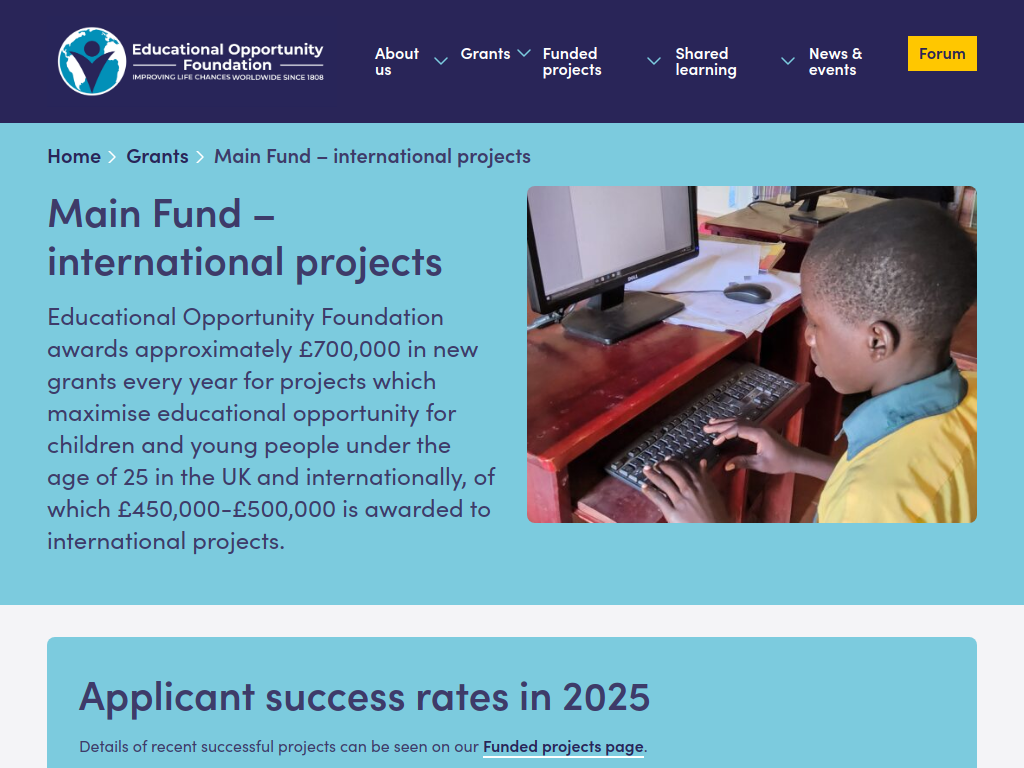
The Educational Opportunity Foundation offers £30,000–£70,000 in grant funding to UK-registered charities delivering international education projects that improve opportunities for disadvantaged children and young people under the age of 25.
The Foundation supports projects that improve access to education, strengthen teaching and learning, and develop sustainable educational opportunities in marginalised communities worldwide.
Here's what you can expect:
£30,000–£70,000 in grant funding per project
Up to £35,000 per year for multi-year projects
Funding for projects lasting one to three years
Support covering 25%–100% of eligible project costs
Funding for new, pilot or recently launched projects
Up to 20% of the grant available towards overhead costs
Support for projects improving educational access, quality and sustainability
Opportunities to expand education for underserved children and young people
Preference for projects with some matched funding, although this is not compulsory
What projects can be funded?
The Foundation supports three main areas:
1. Improving Access to Education
Projects helping children and young people overcome barriers to education, including:
Increasing educational opportunities for girls
Constructing classrooms and school sanitation facilities
Training teachers in inclusive educational practices
Supporting children who are excluded or overlooked
Improving community attitudes towards education
2. Improving the Quality of Education
Initiatives strengthening teaching and learning, including:
Teacher training and professional development
Improved learning resources
Extra-curricular educational support
Vocational training and employability skills
STEM education, digital skills and green economy training
3. Improving Educational Sustainability
Projects developing long-term, locally supported education services, including:
Community ownership and management of education projects
Sustainable funding and income-generating approaches
Reducing the environmental impact of educational activities
Building local capacity to maintain services beyond the grant period
Who can apply?
Eligible applicants must be UK-registered charities delivering or directly supporting international education projects.
Important eligibility requirements:
Applicants must:
Have annual income between £100,000 and £1.5 million in their most recently completed financial year.
Have at least three years of continuous accounts submitted to the relevant UK charity regulator.
Be financially sound.
Be directly involved in delivering the proposed project activities.
Demonstrate that the project benefits disadvantaged or marginalised children and young people under 25.
Have appropriate safeguarding arrangements.
Consider environmental sustainability and climate change in project planning.
Charities registered outside the UK, Community Interest Companies (CICs), individuals and organisations primarily focused on fundraising are not eligible.
What cannot be funded?
The Foundation generally excludes:
Individual scholarships, bursaries and school fees
Summer camps
International travel and volunteering trips
Conferences and expeditions
Long-term projects outside the permitted funding period
Services normally provided through state education systems
Projects primarily covering uniforms, transport or routine running costs
How does the application process work?
Stage 1 – Initial Application
Applicants submit a short online application and completed project budget using the Foundation's template.
Stage 2 – Detailed Proposal
Shortlisted organisations are invited to submit a more detailed application, budget and project results framework.
Stage 3 – Assessment
Some shortlisted applicants may be invited to an online discussion before their proposals are reviewed by the Grants Committee.
Stage 4 – Funding Decision
Successful organisations receive confirmation following the relevant Grants Committee meeting.
Funding: £30,000–£70,000 per project
Project Duration: 1–3 years
Next Applications Open: 1 March 2027
Next Stage 1 Deadline: 23 March 2027
Next Grants Committee Meeting: 14 July 2027
-
€21 Million in EU Funding to Combat Violence Against Women & Children – CERV Daphne 2026
The European Commission is offering a combined €21 million in grant funding through the Citizens, Equality, Rights and Values (CERV) Daphne 2026 Programme.
The programme supports organisations developing projects that prevent gender-based violence, protect victims and survivors, strengthen child protection systems and improve responses to domestic violence.
Here's what you can expect:
€21 million available across the funding call
Individual project grants generally ranging from €200,000 to €600,000 under four priorities
Larger grants of approximately €1 million to €2.5 million for eligible intermediary organisations under the regranting priority
Funding for national and international partnerships
Support for prevention, protection and survivor services
Opportunities to improve child safeguarding and protection systems
Funding for training, awareness raising and institutional cooperation
Support for grassroots organisations through intermediary funding arrangements
EU lump-sum grant agreements
What projects can be funded?
The programme has five funding priorities:
1. Supporting Grassroots Civil Society Organisations
Funding for intermediary organisations that distribute financial support to smaller civil society organisations tackling gender-based violence and violence against children.
2. Protecting Victims & Survivors
Projects improving access to specialist services, practical assistance, coordinated protection and long-term support for survivors of gender-based violence.
3. Preventing Gender-Based Violence
Initiatives addressing the causes of violence, challenging harmful attitudes, improving awareness and strengthening prevention measures.
4. Strengthening Responses to Violence Against Women
Projects supporting implementation of European frameworks and legislation aimed at preventing violence against women and domestic violence.
5. Improving Child Protection Systems
Projects strengthening integrated child protection services, professional cooperation and coordinated responses to violence against children.
Who can apply?
Depending on the funding priority, eligible applicants may include:
Nonprofit organisations
Registered charities and civil society organisations
Non-governmental organisations (NGOs)
Public authorities and public bodies
Specialist organisations supporting women and children
Organisations working on domestic violence prevention
Child protection organisations
Eligible international partnerships and consortia
Important eligibility requirements:
Applicants must be established in a country eligible under the relevant CERV funding topic.
Projects must directly address one or more of the programme's priorities.
Applicants must demonstrate relevant experience and organisational capacity.
Collaborative projects must meet the partnership requirements of their chosen topic.
Proposals must demonstrate measurable outcomes and meaningful benefits for the communities served.
Applicants must comply with the European Commission's financial, safeguarding and grant management requirements.
UK applicants: UK-based organisations should not assume they are eligible to lead or receive direct funding. CERV participation rules differ from other European programmes, and applicants must check the specific call conditions before applying.
How does the application process work?
Stage 1 – Choose a Funding Priority
Review the five available funding topics and select the one that best matches the proposed project.
Stage 2 – Check Eligibility
Read the official call document, including geographic eligibility, partnership requirements, eligible activities and grant conditions.
Stage 3 – Prepare Your Proposal
Develop a project plan, expected outcomes, implementation arrangements and detailed budget.
Stage 4 – Submit Online
Applications must be submitted electronically through the EU Funding & Tenders Portal.
Funding: €21 million total programme budget, with individual grant amounts depending on the selected priority.
Applications Opened: 7 July 2026
Application Deadline: 5 November 2026
-
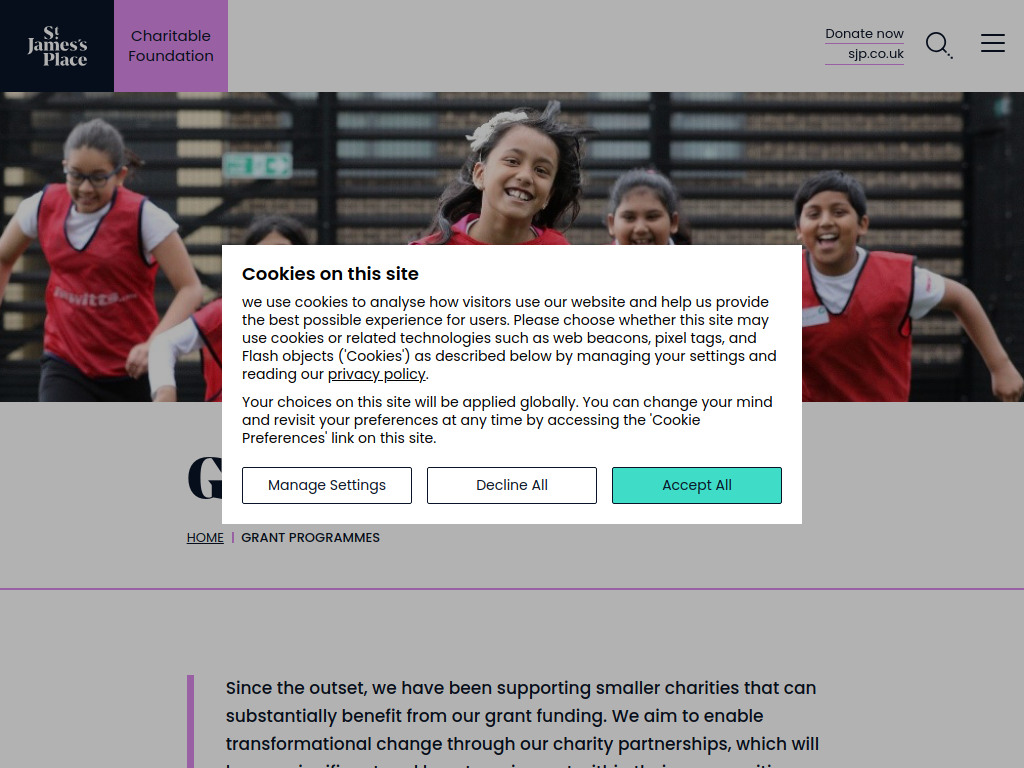
Up to £90,000 for UK Charities Supporting Disadvantaged Communities – St. James's Place Charitable Foundation
The St. James's Place Charitable Foundation provides up to £90,000 in grant funding to small and medium-sized charities delivering services that improve the lives of disadvantaged and vulnerable people.
The Foundation supports projects across five priority areas, including children and young people, mental health, cancer care, end-of-life care and financial wellbeing.
Here's what you can expect:
Up to £30,000 through the Small Grants Programme
Up to £90,000 through the Major Grants Programme
Single-payment or multi-year funding options
Grants supporting frontline staff salaries and direct service delivery
Funding for eligible project costs and small capital projects
Opportunities to strengthen established community services
Quarterly application rounds, with each funding theme considered twice annually
What funding is available?
1. Small Grants – Up to £30,000
For eligible charities with annual income below £1 million.
A single grant of up to £30,000, or
Up to £10,000 annually over three years
The award cannot exceed 10% of the charity's annual income.
2. Major Grants – Up to £90,000
For eligible charities with annual income between £1 million and £7 million.
A single grant of up to £90,000, or
Up to £30,000 annually over three years
Both programmes can support eligible frontline delivery costs. Core funding is limited to 15% of the grant budget.
What projects can be funded?
The Foundation prioritises five areas:
Children & Young People: Supporting disadvantaged young people under 25, including those facing disabilities, poverty and barriers to education or employment.
Mental Health: Providing specialist support, early intervention and services that reduce isolation and stigma.
Living Well with Cancer: Helping people with cancer and their families access emotional, practical and specialist support.
End-of-Life Care: Supporting hospice services, respite care and people living with life-limiting conditions.
Financial Wellbeing: Helping disadvantaged individuals and communities improve financial stability, access advice and develop financial skills.
Who can apply?
Eligible organisations include:
Registered charities in the UK
Eligible charities registered in Ireland, Jersey or Guernsey
Special needs schools
Eligible UK-registered charities delivering projects overseas through local partners
Important eligibility requirements:
Applicants must:
Have annual income below £7 million.
Demonstrate that their work aligns with the Foundation's priorities.
Provide evidence of community need and measurable outcomes.
Deliver inclusive services that are accessible to eligible beneficiaries.
Have suitable financial management and governance arrangements.
Be introduced by a St. James's Place employee, Partner or Adviser who has an active, meaningful connection with the charity.
Applications are by invitation only. Unsolicited applications are not accepted.
What cannot be funded?
The Foundation generally excludes:
Individuals and personal fundraising
Standalone research
Pilot programmes
Retrospective costs
Fundraising events and sponsorship
Activities primarily funded by statutory agencies
NHS charities
Large capital appeals
Organisations raising money on behalf of other charities
2027 Application Dates
Round
Funding Themes
Application Window
Winter
Financial Wellbeing, End-of-Life Care, Cancer Support, Mental Health
4–11 January 2027
Spring
Children & Young People
5–9 April 2027
Summer
Financial Wellbeing, End-of-Life Care, Cancer Support, Mental Health
1–8 July 2027
Autumn
Children & Young People
1–8 October 2027
Funding: Up to £90,000 per charity
Next Applications Open: 4 January 2027
Next Deadline: 11 January 2027
-

Unlimited Fundraising Potential for Charities & Nonprofits – GlobalGiving
GlobalGiving offers registered nonprofit organisations worldwide the opportunity to raise funds through its international crowdfunding platform, connecting charitable projects with individual donors, businesses and philanthropic supporters.
Through its Pathway to GlobalGiving onboarding programme, eligible organisations can become verified partners and access fundraising tools, training and opportunities to increase their visibility.
Here's what you can expect:
No fixed fundraising limit
Free registration, with no setup or subscription fees
A personalised online fundraising page
Access to an international community of donors
Opportunities to participate in fundraising and matching campaigns
Potential access to corporate giving partnerships
Tools for collecting one-off and recurring donations
Fundraising training and educational resources
Support with donor engagement and communications
Opportunities to build long-term fundraising capacity
What projects can raise funding?
GlobalGiving supports a broad range of charitable activities, including:
Education: Improving access to learning, schools and educational resources
Healthcare: Supporting health services and community wellbeing
Poverty Reduction: Helping disadvantaged communities access essential resources
Climate & Environment: Supporting conservation, sustainability and environmental protection
Women & Girls: Improving opportunities, rights and wellbeing
Children & Young People: Supporting youth development, protection and education
Humanitarian Relief: Responding to disasters, emergencies and displacement
Community Development: Strengthening local services and community-led initiatives
Economic Empowerment: Supporting skills development, employment and livelihoods
Projects must have a genuine charitable purpose and comply with GlobalGiving's eligibility requirements.
Who can apply?
Eligible applicants include:
Registered charities
Registered nonprofit organisations
Non-governmental organisations (NGOs)
Community-based nonprofit organisations
International charitable organisations
Organisations based in the UK and other eligible countries
Organisations that are not formally registered may be able to participate through an eligible registered nonprofit acting as a fiscal sponsor.
Important eligibility requirements:
Applicants must:
Be a legally registered nonprofit organisation or have an eligible fiscal sponsor
Demonstrate a track record of delivering charitable projects
Complete GlobalGiving's due diligence process
Provide evidence of their charitable activities and impact
Have appropriate governance and financial records
Provide organisational banking information
Agree to GlobalGiving's terms and policies
What documents are required?
For organisations registered outside the United States, including UK charities, GlobalGiving generally requests:
Proof of nonprofit or charitable registration
Governing documents or constitution
Financial statements for the previous two years
Current annual budget
Evidence of programme activities and achievements
A recent reference from an independent supporter or partner
Details of senior staff and board members
Organisational bank account information
How does the application process work?
Stage 1 – Register Your Interest
Complete the online interest survey for the Pathway to GlobalGiving programme.
Stage 2 – Receive an Invitation
GlobalGiving invites selected organisations to participate in its onboarding programme, with cohorts considered approximately every two months.
Stage 3 – Fundraising Preparation
Complete the digital Fundraising-Ready Workbook to develop your fundraising strategy.
Stage 4 – Due Diligence
Submit the required organisational and financial documents for review.
Stage 5 – Start Fundraising
Approved organisations can create fundraising pages, share their projects with supporters and access relevant GlobalGiving campaigns.
Are there any fees?
There is no fee to join GlobalGiving.
However, fees are deducted from donations:
A nonprofit support fee of 5%–12%, depending on the donation and organisation
An additional 3% third-party transaction processing fee
These charges help fund the platform, donor support, fundraising resources and payment processing.
Funding: No fixed grant amount – donations and fundraising opportunities
Geographic Eligibility: Worldwide, including the United Kingdom
Deadline: No fixed closing date for registering interest
-
Up to $500 for Grassroots Community & Social Impact Projects – The Pollination Project
The Pollination Project (TPP) provides up to USD $500 in seed grant funding to individuals, volunteer-led community groups and early-stage nonprofit organisations developing projects that create a more compassionate, sustainable and equitable world.
The programme supports small, community-driven initiatives that may struggle to access traditional grant funding, helping changemakers turn their ideas into practical action.
Here's what you can expect:
Up to $500 in seed grant funding
Applications accepted worldwide, including the UK
Rolling applications throughout most of the year
Support for grassroots and early-stage community initiatives
Funding for practical, charitable activities
A straightforward online application process
Access to a global community of more than 6,000 changemakers
Opportunities for networking and capacity-building support
Potential access to future funding opportunities and donor introductions
What projects can be funded?
The Pollination Project considers a broad range of community-led initiatives, including:
Community Development: Improving local services and supporting underserved communities
Education: Creating opportunities for learning, skills development and educational access
Environmental Protection: Supporting conservation, sustainability and climate resilience
Animal Welfare: Protecting animals and promoting compassionate treatment
Social Justice: Tackling inequality and supporting human rights
Women & Girls: Empowering women and girls through community initiatives
Health & Wellbeing: Supporting practical activities that improve community wellbeing
Arts & Creativity: Using creative activities to strengthen communities and encourage positive change
Economic Empowerment: Helping disadvantaged individuals develop skills and opportunities
Projects must serve charitable purposes and demonstrate meaningful benefits for their communities.
Who can apply?
Eligible applicants include:
Individuals with grassroots project ideas
Informal community groups
Volunteer-led initiatives
Early-stage nonprofit organisations
Registered charities
Community organisations based anywhere in the world
Important eligibility requirements:
Applicants must:
Have a total project budget below $10,000
Have an annual organisational budget below $50,000, where applicable
Operate without paid staff, although occasional professional services are permitted
Have already undertaken some planning or initial project activities
Demonstrate that the project serves charitable purposes rather than personal financial gain
Be applying for their first Pollination Project seed grant
Be able to receive funding in US dollars through an eligible payment method
Submit their application in English
What cannot be funded?
The programme does not support:
Salaries or payments to applicants or their family members
Political campaigns or election activities
Projects promoting animal agriculture
Events serving animal products
Beekeeping projects producing honey for sale or consumption
Academic research without a practical plan for real-world change
Projects involving discrimination or compulsory religious participation
Synthetic pesticides, chemical fertilisers and certain single-use materials
Donations passed directly to unrelated organisations
How does the application process work?
Stage 1 – Check Eligibility
Applicants review the funding guidelines to confirm that their project qualifies.
Stage 2 – Submit an Application
Complete the online application explaining the project's purpose, activities, budget and expected community impact.
Applicants must provide details of a referee who knows their work.
Stage 3 – Application Review
Applications submitted before the end of a month are normally reviewed during the following month.
Funding decisions are typically communicated within 6–12 weeks.
Stage 4 – Project Delivery
Successful applicants deliver their proposed activities and provide reporting on how the grant was used and what the project achieved.
Funding: Up to USD $500 per project
Deadline: Rolling applications – no fixed closing date
-
Up to $100,000 for Nonprofits & Social Impact Projects – Cisco Global Impact Cash Grants
Cisco and the Cisco Foundation are offering up to USD $100,000 in grant funding for first-time recipients through the Global Impact Cash Grant Programme.
The programme supports nonprofit organisations (NPOs) and non-governmental organisations (NGOs) developing innovative, technology-enabled solutions to major social, economic and environmental challenges.
Cisco is particularly interested in projects that support underserved communities and have the potential to be expanded or replicated nationally or internationally.
Here's what you can expect:
Up to $100,000 in cash grant funding for first-time recipients
Applications accepted throughout the year
Funding for innovative, technology-enabled social impact projects
Support for organisations working nationally or internationally
Opportunities to develop scalable and sustainable solutions
Funding for programmes addressing critical community needs
Support for initiatives improving education and economic opportunity
Opportunities to strengthen climate resilience
Funding for projects with measurable, long-term social impact
What projects can be funded?
Cisco prioritises four social impact areas:
1. Education
Projects improving access to education and learning opportunities, including:
Digital learning and educational technology
Skills development
Improving educational engagement and outcomes
Technology that expands access to learning
2. Economic Opportunity
Initiatives helping underserved communities access better economic opportunities, including:
Employment and workforce development
Digital skills training
Entrepreneurship support
Access to financial products and services
Technology-enabled career development
3. Climate Resilience
Projects helping communities respond to environmental challenges, including:
Climate adaptation and resilience
Regenerative agriculture
Environmental conservation
Clean energy solutions
Technology supporting sustainable development
4. Crisis Response
Programmes supporting communities experiencing emergencies or hardship, including:
Food security
Housing and shelter
Disaster relief
Access to essential services
Secure connectivity for vulnerable communities
Projects should demonstrate how technology improves the reach, effectiveness or efficiency of their services.
Who can apply?
Eligible applicants include:
Registered nonprofit organisations
Non-governmental organisations (NGOs)
International charities
Organisations delivering national or multinational programmes
Nonprofits developing innovative, technology-enabled solutions
Important eligibility requirements:
Applicants must:
Be a legally recognised nonprofit or NGO.
Demonstrate a clear focus on at least one of Cisco's four priority sectors.
Serve a target population where more than 65% are economically underserved relative to local standards.
Demonstrate innovative use of information and communications technology.
Show potential for their solution to be scaled or replicated.
Establish measurable outcomes and clear impact indicators.
Have an experienced leadership team.
Demonstrate a credible plan for long-term sustainability.
Generally have organisational overhead costs of no more than 25%, although exceptions may be considered.
International eligibility:
Organisations outside the United States may apply but must provide documentation demonstrating that they are equivalent to a US public charity.
This means eligible UK charities and international NGOs can potentially apply, subject to Cisco's assessment.
What cannot be funded?
Cisco generally does not support:
Individual applicants
General organisational operating expenses unrelated to the proposed programme
Standalone research projects
Programmes primarily focused on physical or mental healthcare
Schools, scholarships and university programmes
Conferences, festivals and fundraising events
Capital building projects
Political or religious activities
Routine computer equipment purchases
How does the application process work?
Stage 1 – Eligibility Assessment
Organisations complete Cisco's online eligibility quiz to confirm whether their programme meets the basic requirements.
Stage 2 – Letter of Inquiry (LOI)
Eligible organisations submit an initial proposal outlining their project, target beneficiaries, expected impact and budget.
Cisco may take up to three months to review the initial enquiry.
Stage 3 – Full Application
Selected organisations are invited to submit a detailed funding proposal.
A decision is generally provided within approximately three months of the full application being submitted.
Stage 4 – Grant Agreement & Reporting
Successful applicants must sign a grant agreement and report on their project's progress and measurable outcomes.
Funding: Up to USD $100,000 for first-time grant recipients
Deadline: Rolling applications – no fixed closing date
-
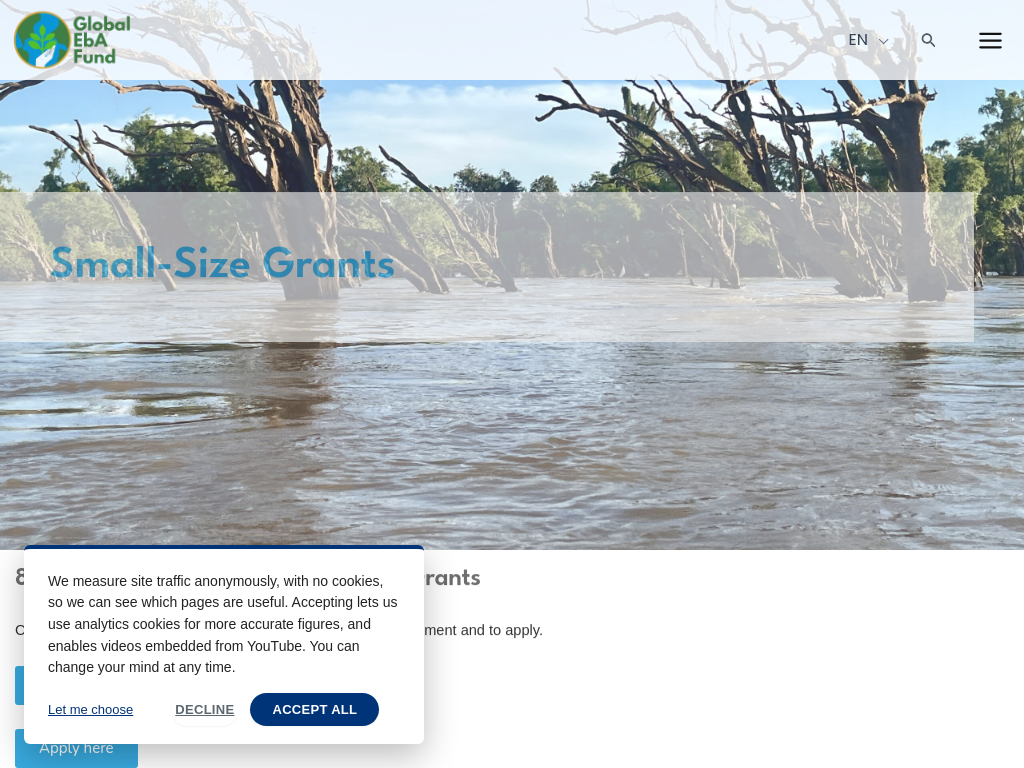
Up to $250,000 for Climate Adaptation & Environmental Projects – Global EbA Fund
The Global Ecosystem-based Adaptation (EbA) Fund is offering grants of up to USD $250,000 to organisations developing innovative approaches to climate change adaptation, environmental resilience and sustainable ecosystem management.
The fund supports projects that use nature-based solutions to help vulnerable communities adapt to climate change while protecting biodiversity and strengthening local ecosystems.
Here's what you can expect:
Up to $250,000 in grant funding per project
Funding for projects lasting up to 24 months
Support for innovative climate adaptation initiatives
Opportunities to strengthen local environmental resilience
Funding for research, technical capacity and knowledge sharing
Support for developing scalable nature-based solutions
Opportunities to strengthen partnerships with local organisations
Funding to help develop investment-ready climate adaptation projects
Support for projects addressing barriers to wider adoption of Ecosystem-based Adaptation
What projects can be funded?
The programme supports initiatives including:
Climate Adaptation: Helping vulnerable communities respond to climate-related risks
Ecosystem Restoration: Strengthening the role of healthy ecosystems in climate resilience
Nature-Based Solutions: Developing and scaling approaches that use nature to reduce climate vulnerability
Research & Innovation: Generating evidence and practical solutions to barriers affecting climate adaptation
Skills & Capacity Building: Strengthening local organisations' ability to implement effective adaptation strategies
Sustainable Finance: Developing investment-ready climate adaptation projects
Policy Development: Improving policies and institutional frameworks that support Ecosystem-based Adaptation
Knowledge Sharing: Developing partnerships and networks that encourage successful approaches to be replicated
Projects must demonstrate innovative and scalable solutions that create lasting environmental and social benefits.
Who can apply?
Eligible applicants include:
Non-governmental organisations (NGOs)
International NGOs
Community-based organisations
Indigenous Peoples' organisations
Universities and academic institutions
Research institutes and think tanks
Intergovernmental organisations
Private-sector companies, subject to additional conditions
Consortia of eligible organisations
Important eligibility requirements:
Applicants must:
Be a legally recognised organisation
Demonstrate experience relevant to the proposed project
Deliver projects benefiting Official Development Assistance (ODA)-eligible countries
Prioritise vulnerable communities, particularly in Small Island Developing States (SIDS) and Least Developed Countries (LDCs)
Demonstrate a clear connection between climate risks and the proposed adaptation solution
Build on existing work, knowledge or partnerships
Work with local institutions or organisations
Demonstrate how the project's impact will continue beyond the funding period
Incorporate local participation, gender equality and Indigenous knowledge where relevant
Applications from other ODA-eligible countries may be considered where proposals demonstrate exceptional ambition and potential for scaling.
Important restrictions:
Individuals cannot apply for personal funding or study grants.
Government organisations cannot receive funding directly.
Private-sector applicants cannot use the funding for ordinary commercial or profit-making activities.
Projects must go beyond standalone environmental activities and demonstrate how they address wider barriers to scaling climate adaptation.
Funding: Up to USD $250,000 per project
Project Duration: Up to 24 months
Applications Opened: 28 September 2026
Application Deadline: 26 October 2026
-
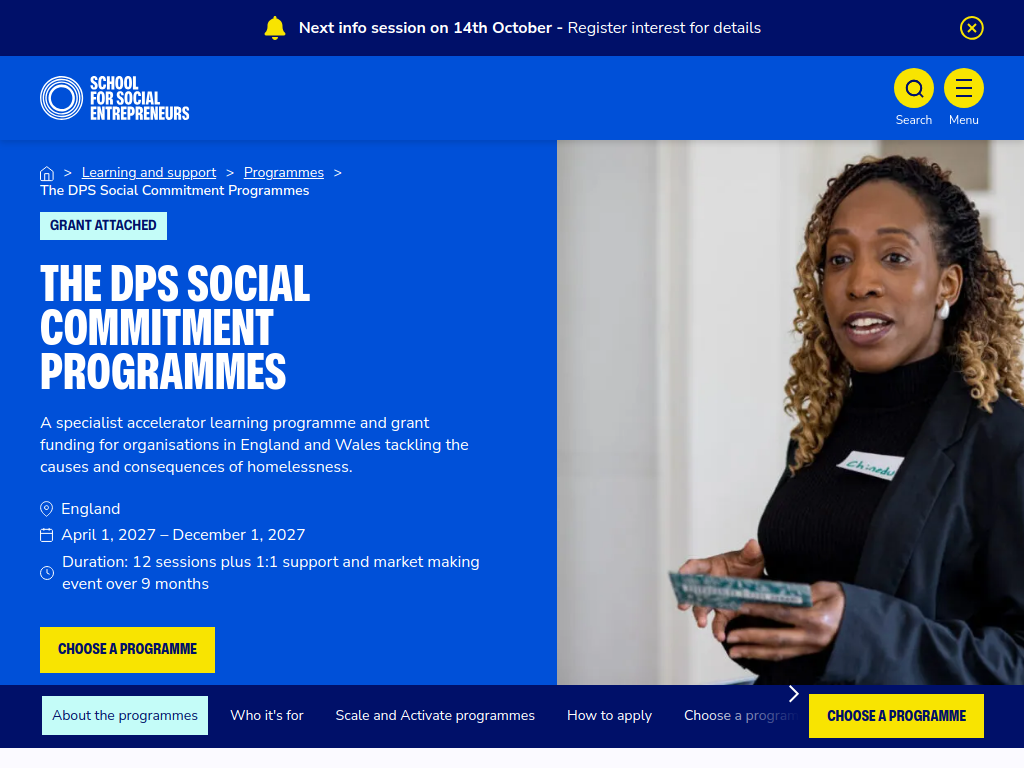
Up to £10,000 for Charities & Social Enterprises Tackling Homelessness – DPS Social Commitment Programme
The School for Social Entrepreneurs (SSE), in partnership with The Deposit Protection Service (DPS), is offering grants of up to £10,000 to charities and social enterprises helping people access and maintain secure housing across England and Wales.
The DPS Social Commitment Programme combines grant funding with specialist training, mentoring and business development support to help organisations strengthen their services, increase income and tackle the causes and consequences of homelessness.
Here's what you can expect:
Up to £10,000 in grant funding
Two programmes supporting early-stage and established organisations
Specialist accelerator and business development training
Eight group learning sessions
Four peer coaching sessions
Personalised one-to-one business coaching
Support with fundraising and generating sustainable income
Guidance on leadership, business planning and measuring social impact
Networking with other social entrepreneurs and sector specialists
Access to SSE's community of more than 7,000 fellows
Opportunities to connect with potential customers and partners
Two funding programmes are available:
1. Activate – Up to £7,000
Designed for early-stage organisations that have started delivering activities but need support developing their business model and expanding their impact.
Up to £7,000 in grant funding
Generally suited to organisations with annual income below £100,000
Support with developing and testing business ideas
Training to strengthen financial sustainability
Funding paid in three instalments, subject to programme requirements
2. Scale – Up to £10,000
Designed for more established organisations ready to expand their services and reach more people.
Up to £10,000 in grant funding
Generally suited to organisations with annual income above £100,000
Support with organisational growth and expansion
Guidance on developing sustainable income streams
Specialist leadership and business development support
The £100,000 income threshold is a guide rather than an absolute cut-off. Organisations close to this amount can contact SSE for advice.
What projects can be supported?
The programme supports organisations addressing homelessness and housing insecurity, including:
Homelessness Prevention: Helping people avoid losing their homes
Housing Advice: Supporting tenants with housing rights and tenancy issues
Employment & Training: Helping people develop skills and access employment to improve housing stability
Financial Support: Providing debt, budgeting and benefits advice
Mental Health & Wellbeing: Helping individuals overcome challenges affecting their ability to maintain housing
Domestic Abuse Support: Supporting survivors with safety, stability and accommodation
Refugee Integration: Helping refugees and people seeking asylum access housing and community support
Rough Sleeping: Supporting people experiencing homelessness into more stable accommodation
Who can apply?
Eligible applicants include:
Registered charities
Community Interest Companies (CICs)
Social enterprises
Community Benefit Societies
Co-operatives and other eligible social-purpose organisations
Constituted community organisations with appropriate governing arrangements
Important eligibility requirements:
Organisations must be based in England or Wales.
The majority of beneficiaries must be located in England or Wales.
Activities must help people access or sustain housing, including private rented accommodation, or reduce homelessness and rough sleeping.
Organisations must already be active and have an appropriate governing document or legal structure.
Applicants must be willing to participate in the training and development programme.
A senior organisational leader must participate in the programme.
Organisations working on wider issues such as employment, financial hardship or mental health can apply where there is a clear connection to preventing housing insecurity.
What can the funding cover?
Grants can support organisational development and activities related to housing stability, including:
Staff salaries
Project delivery costs
Equipment
Improving organisational systems
Applying learning from the programme
Developing and strengthening services
Funding: Up to £7,000 for Activate or £10,000 for Scale
Programme Dates: April–December 2027
Application Deadline: 🚨 16 November 2026 at 12:00pm UK time
-
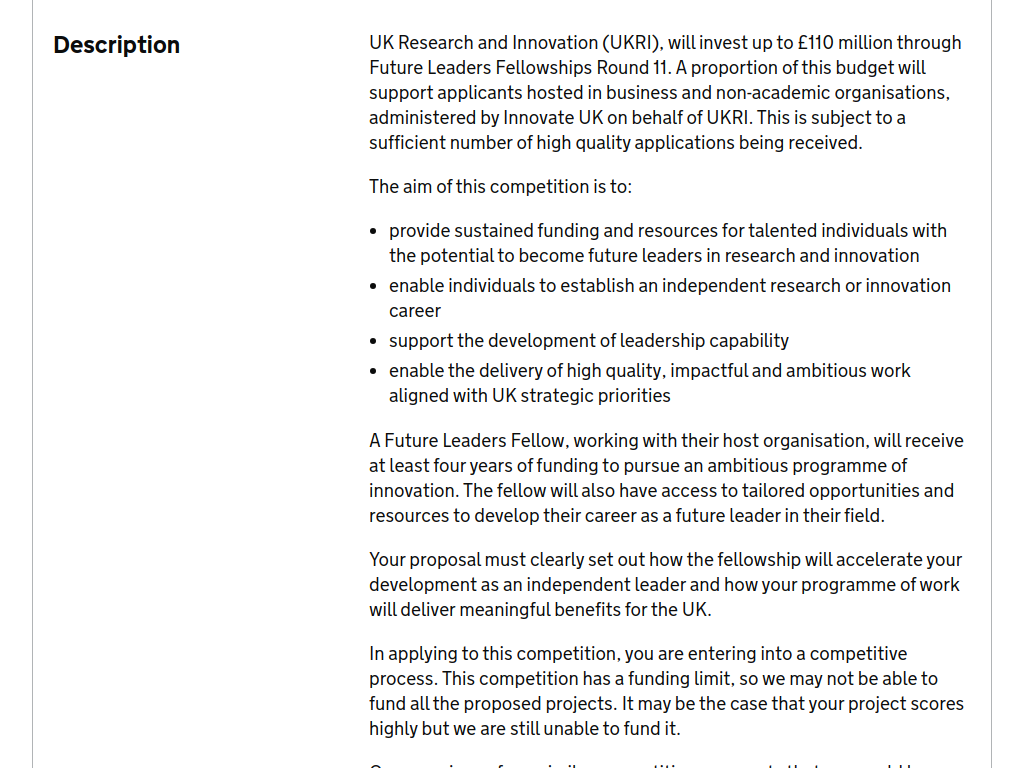
Up to £3 Million for Research, Innovation & Future Leaders – UKRI Future Leaders Fellowships
UK Research and Innovation (UKRI), through Innovate UK, is offering grants of £100,000 to £3 million to support ambitious research and innovation projects led by individuals with the potential to become future leaders in their fields.
The Future Leaders Fellowships: Round 11 programme provides long-term funding, professional development and organisational support to help talented researchers and innovators establish independent careers and deliver projects benefiting the UK.
Here's what you can expect:
£100,000–£3 million in grant funding per project
Up to £110 million available across the wider funding round
At least four years of funding
Potential extension for a further three years
Support for ambitious research and innovation programmes
Funding for eligible staffing, research and project costs
Leadership training and professional development
Access to mentoring and specialist expertise
Opportunities for collaboration between businesses, charities and research organisations
Support for developing new technologies, products, services and approaches
Opportunities for flexible working and part-time fellowships
What projects can be funded?
The programme welcomes proposals from across research and innovation, including:
Artificial Intelligence & Emerging Technologies: Developing innovative technological solutions
Engineering & Advanced Manufacturing: Supporting new processes, products and technologies
Clean Energy & Sustainability: Developing research and innovations addressing environmental challenges
Healthcare & Life Sciences: Advancing research and technologies with potential societal benefits
Creative Industries: Supporting innovation across creative, cultural and knowledge-based sectors
Social Sciences & Humanities: Developing research that contributes to economic and societal progress
Interdisciplinary Innovation: Combining expertise across different sectors to address complex challenges
Projects must go beyond normal business activities and demonstrate genuine innovation, meaningful UK benefits and a clear plan for developing the fellow's leadership capabilities.
Who can apply?
Eligible UK host organisations include:
Registered businesses of any size
Charities
Nonprofit organisations
Public-sector organisations
Agri-tech centres
Catapult centres and other eligible non-academic research organisations
Important eligibility requirements:
Applicants must have an eligible UK-based host organisation.
The proposed fellow must demonstrate the skills and experience required to lead the project.
A PhD is not required, provided the fellow can demonstrate equivalent research or innovation experience.
Applicants from outside the UK may be eligible with the support of a qualifying UK host.
Projects must last four years initially.
The majority of funded activities and spending must take place in the UK.
Projects must demonstrate clear benefits for the UK.
Applicants must provide a leadership development plan and evidence of organisational support.
Universities and certain research organisations must apply through the separate UKRI Funding Service, rather than this Innovate UK application route.
Funding rates:
The proportion of eligible costs covered depends on the organisation and type of research.
For industrial research:
Up to 70% for micro and small businesses
Up to 60% for medium-sized businesses
Up to 50% for large businesses
For experimental development:
Up to 45% for micro and small businesses
Up to 35% for medium-sized businesses
Up to 25% for large businesses
Eligible charities, nonprofits and public-sector organisations undertaking non-economic activities may receive up to 100% of eligible project costs.
Funding: £100,000–£3 million per project
Application Deadline: 4 November 2026 at 11:00am UK time
-
Large-Scale Funding for Ambitious Social Impact Projects – The Audacious Project
The Audacious Project, an initiative of TED, provides opportunities for established nonprofit organisations to secure substantial philanthropic funding for bold ideas that could create lasting global change.
The programme supports ambitious, evidence-backed solutions to major social, environmental and humanitarian challenges, helping organisations turn transformative visions into large-scale impact.
Here's what you can expect:
Large-scale, multi-year philanthropic funding opportunities
No fixed maximum funding amount publicly specified
Opportunities to connect with major international donors
Support developing ambitious, long-term funding proposals
Collaboration to strengthen project strategy and implementation plans
Opportunities to scale proven solutions
Potential international exposure through TED Talks
Access to a network of philanthropists and social impact leaders
Approximately 8–10 finalist projects selected through the assessment process
What projects can be funded?
The Audacious Project welcomes innovative ideas addressing major global challenges, including:
Global Health: Improving healthcare access, disease prevention and health outcomes
Climate Change: Developing scalable solutions to environmental challenges
Education: Expanding access to quality education and learning opportunities
Social Justice: Tackling inequality and strengthening human rights
Poverty Reduction: Developing approaches that improve opportunities for disadvantaged communities
Environmental Protection: Protecting ecosystems and creating lasting environmental impact
Humanitarian Challenges: Supporting innovative solutions to urgent global problems
Projects must demonstrate the potential to create significant, measurable and sustainable change.
Who can apply?
Eligible applicants include:
Established nonprofit organisations
Non-governmental organisations (NGOs)
Charitable institutions
Organisations delivering large-scale social impact initiatives
Collaborations involving multiple nonprofit organisations or institutions
Individuals aged 18 or over applying on behalf of an eligible organisation
Important eligibility requirements:
Applicants must:
Have an annual organisational or initiative operating budget of at least $2 million
Demonstrate an innovative and ambitious approach to addressing a major global challenge
Provide evidence that their proposed solution works
Have an experienced team capable of delivering large-scale change
Demonstrate clear outcomes and a credible multi-year implementation strategy
Have the organisational infrastructure required to receive substantial philanthropic funding
Show how the proposed solution could achieve lasting impact within a matter of years
The programme is particularly interested in projects that go beyond incremental improvements and could transform how major global challenges are addressed.
How does the application process work?
Stage 1 – Submit Your Idea
Organisations complete a short online survey outlining their proposed solution and its potential impact.
Stage 2 – Invitation & Assessment
Selected organisations are invited to submit a more detailed application. Proposals undergo several rounds of assessment.
Stage 3 – Proposal Development
Approximately 8–10 finalist projects are selected, with support provided to strengthen their proposals and funding strategies.
Stage 4 – Donor Presentations
Finalist projects are presented privately to philanthropic donors. Funded initiatives are subsequently introduced to the public through TED.
Funding: Large-scale, multi-year philanthropic support. No standard minimum or maximum individual award is published.
Deadline: No fixed deadline – submissions accepted year-round.
-
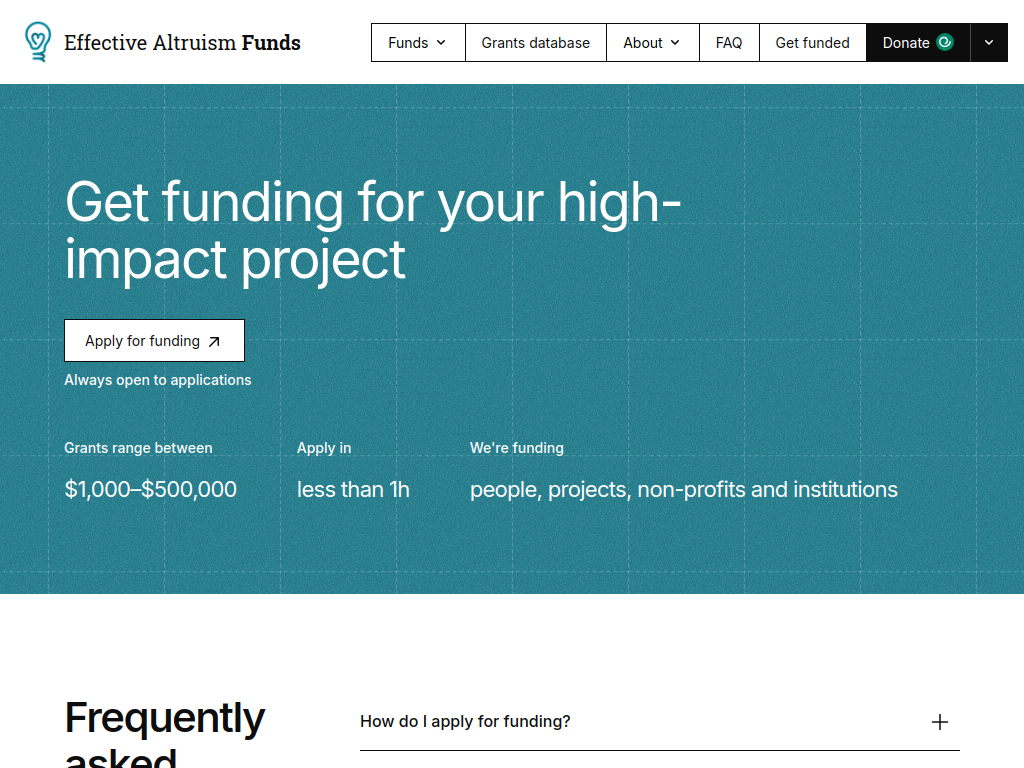
Up to $500,000 for High-Impact Social Change & Research Projects – Effective Altruism Funds
Effective Altruism Funds (EA Funds) provides grants ranging from $1,000 to $500,000 to individuals, nonprofits and organisations developing evidence-based solutions to some of the world's most pressing challenges.
The programme focuses on projects that can achieve significant positive impact, particularly in areas that are often overlooked or underfunded.
Here's what you can expect:
$1,000–$500,000 in grant funding
Applications accepted throughout the year
Funding available to individuals, projects, nonprofits and institutions
Support for research, advocacy and organisational development
Funding for projects addressing global challenges
Opportunities for early-stage initiatives and established organisations
A streamlined online application process, estimated to take less than one hour
Applications assessed by specialist fund managers
What projects can be funded?
EA Funds currently accepts applications across three main funding areas:
1. Animal Welfare Fund
Supports projects improving the wellbeing of animals, particularly neglected species and regions.
Potential activities include:
Farmed animal welfare improvements
Research into effective animal advocacy
Campaigns addressing animal suffering
Projects improving the welfare of aquatic animals
Initiatives strengthening animal protection efforts
2. EA Infrastructure Fund
Supports organisations and initiatives that strengthen the effective altruism community and improve its ability to achieve positive impact.
Potential activities include:
Research and knowledge sharing
Developing talent and professional networks
Improving access to funding and resources
Community-building initiatives
Strengthening organisations working on high-impact causes
3. Transformative AI Fund
Supports projects addressing major risks associated with advanced artificial intelligence and other global catastrophic threats.
Potential activities include:
AI safety research
Research into risks from advanced AI systems
Projects addressing catastrophic biological risks
Research and initiatives supporting humanity's long-term future
Developing knowledge and approaches to reduce global risks
Who can apply?
Potential applicants include:
Individuals developing high-impact projects
Nonprofit organisations and charities
Researchers and academic institutions
Early-stage initiatives
Established organisations working in eligible cause areas
Teams developing innovative approaches to global challenges
Organisations based internationally, subject to individual funding and legal requirements
Applicants should demonstrate:
A clear and measurable intended impact
Strong alignment with one of the available funding streams
An evidence-informed approach to addressing the problem
A credible plan for delivering the proposed activities
Why the project represents an effective use of funding
The potential to achieve significant positive outcomes
Applicants do not necessarily need to be registered charities to be considered.
Important funding information:
The Global Health and Development Fund is not currently accepting applications.
Applicants interested in this area should check for future updates or explore alternative funders.
The former Long-Term Future Fund has also been replaced by the Transformative AI Fund.
Funding: $1,000–$500,000 per grant, depending on the project and funding stream.
Deadline: No fixed deadline – applications accepted year-round.
Application Status: OPEN NOW for the Animal Welfare Fund, EA Infrastructure Fund and Transformative AI Fund.
-
Grants Averaging $900,000 for Charities & Social Impact Projects – Oak Foundation
The Oak Foundation provides substantial funding to nonprofit organisations working to create a safer, fairer and more sustainable world.
Supporting organisations across more than 40 countries, the Foundation offers long-term grants for projects addressing social inequality, environmental challenges, human rights and community wellbeing.
Although there are currently no open funding calls, organisations whose work closely aligns with Oak Foundation's priorities can submit a Letter of Enquiry for consideration.
Here's what you can expect:
Average grant award of approximately $900,000
Grants generally starting from $25,000
More than 300 grants awarded annually
Most funding provided over multiple years
Support for core organisational costs and project delivery
Opportunities for unrestricted funding
Funding for staff costs, administration and reasonable overheads
Support for long-term organisational development
Opportunities for international nonprofit organisations
What projects can be funded?
Oak Foundation supports organisations working across several priority areas:
Environment – Nature and People: Protecting ecosystems and supporting communities that depend on them
Environment – Regenerative Landscapes: Encouraging sustainable land use and environmental restoration
Environment – Marine Food and Livelihoods: Supporting marine ecosystems and coastal communities
Global Climate Initiatives: Addressing climate change and supporting systemic environmental solutions
International Human Rights: Protecting human rights and advancing justice
Issues Affecting Women: Supporting women's rights, safety and equality
Learning Differences: Improving opportunities and inclusion for people with learning differences
Prevent Child Sexual Abuse: Strengthening prevention, protection and safeguarding
Zimbabwe: Supporting initiatives aligned with the Foundation's country-specific priorities
Special Interest: Supporting selected projects in areas including education, health, humanitarian relief and the arts
Who can apply?
Eligible applicants generally include:
Registered nonprofit organisations
Charities
Non-governmental organisations (NGOs)
Civil society organisations
Community-focused nonprofit organisations
Organisations working on environmental protection
Human rights and social justice organisations
Nonprofits delivering long-term systemic change
Applicants should demonstrate:
Strong alignment with one of Oak Foundation's funding programmes
Clear social or environmental impact
An established organisational mission and strategy
Appropriate governance and financial management
A credible plan for using the requested funding
Relevant experience working with the communities they support
Important funding conditions:
Oak Foundation generally funds no more than 50% of a project's budget.
Funding is normally limited to 20% of an organisation's overall budget.
Applicants are expected to seek financial support from other sources.
Grants below $25,000 are generally not considered, except in special circumstances.
Funding is not available to individuals, university tuition applicants, election campaigns or religious organisations seeking support for religious purposes.
How to apply:
Organisations can submit an online Letter of Enquiry outlining their work and funding requirements.
Applicants must provide:
Organisation details and website
Requested funding amount
Total project budget
Details of existing or potential co-funding
Relevant Oak Foundation funding programme
Project location and purpose
A description of the proposed activities
The Foundation will contact applicants within approximately two months if further information is required or if they are invited to submit a formal proposal.
Funding: Approximately $900,000 average grant award. Individual awards vary, and no universal maximum grant amount is published.
Deadline: No fixed deadline for Letters of Enquiry.
-
Up to £500,000 for Youth Employment & Skills Development – Nuffield Foundation
The Nuffield Foundation has launched its Essential Employment Skills Fund, offering grants of up to £500,000 to support programmes helping young people facing significant barriers to employment develop the skills needed to access good jobs.
The fund aims to identify which approaches are most effective in improving essential employment skills among disadvantaged young people aged 16–24 across the UK.
Here's what you can expect:
Up to £500,000 in grant funding
Most evaluation grants expected to range between £200,000 and £400,000
Funding for robust evaluation of employment skills programmes
Potential additional funding towards programme delivery costs where other funding is unavailable
Support for research partnerships between programme providers and independent evaluators
Opportunities to develop and test evidence-based approaches
Funding for measuring young people's progress towards employment
Support for sharing research findings and scaling effective programmes
Access to the Foundation's research and stakeholder networks
What projects can be funded?
The programme focuses on developing essential employment skills, including:
Communication: Helping young people communicate confidently and effectively
Teamwork & Collaboration: Developing the ability to work with others
Problem-Solving: Strengthening decision-making and critical thinking
Creativity: Encouraging innovative thinking and adaptability
Planning & Organisation: Developing time management and prioritisation skills
Leadership: Building confidence, responsibility and initiative
Digital & Information Skills: Improving the ability to access, assess and use information effectively
These skills can be developed through activities such as:
Vocational training and employability programmes
Work experience and workplace learning
Mentoring and coaching
Enterprise and entrepreneurship programmes
Volunteering and community projects
Digital skills development
Peer support and youth services
Who can apply?
Applications are expected from partnerships involving:
Universities and research institutions
Independent evaluation organisations
Charities and nonprofit organisations
Youth employment and training providers
Schools and further education colleges
Local authorities
Community organisations delivering youth programmes
Important eligibility requirements:
Programmes must support young people aged 16–24 living in the UK.
Activities must focus on young people experiencing significant barriers to employment.
Applicants must identify the essential employment skills being developed.
Programmes should have existing evidence of promise, rather than being entirely new initiatives.
Projects must include a robust impact evaluation and an assessment of programme delivery.
Evaluation should track both skills development and progress towards employment.
Applicants must demonstrate how young people's experiences and views have shaped the programme.
Partnerships between delivery organisations and independent evaluators are strongly expected.
The Foundation anticipates that the evaluation organisation will act as the lead applicant, with charities, schools and other organisations participating as delivery partners.
Who should the projects support?
Priority groups may include young people who:
Have low or no academic qualifications
Have experienced school exclusion or persistent absence
Have special educational needs or disabilities
Experience mental health difficulties
Have experience of the care system
Are young parents or carers
Live in areas with high youth unemployment
Face multiple barriers to education, training and employment
Funding: Up to £500,000 for evaluation, with potential additional programme delivery funding where justified.
Outline Application Deadline: 10 December 2026
-
Grant Funding for Education, Arts & Community Projects – The James Foundation
The James Foundation provides funding to charitable organisations delivering projects that improve educational opportunities, strengthen communities and enhance quality of life.
Established in 2011, the Foundation focuses on supporting innovative programmes that create lasting opportunities for individuals and families, with a particular emphasis on Northeast Indiana, USA.
Here's what you can expect:
Grant funding for eligible nonprofit organisations
Support for educational programmes and innovative learning opportunities
Funding for scholarships and educational access
Support for arts and cultural initiatives
Opportunities for community-focused projects that improve quality of life
Consideration of new and innovative charitable approaches
An initial application process requiring a Letter of Introduction of no more than two pages
The Foundation has supported more than 180 organisations, awarding over $100 million in grants since its establishment.
What projects can be funded?
The Foundation focuses on three main priorities:
Educational Impact & Innovation: Projects expanding access to education, improving learning opportunities and developing innovative educational approaches.
Scholarship Programmes: Initiatives helping individuals access further education, professional development and training opportunities.
Arts & Culture: Projects supporting cultural participation, creativity and community enrichment.
The Foundation is particularly interested in projects that demonstrate clear charitable impact and align with its mission of improving opportunities through education.
Who can apply?
The Foundation primarily supports:
Registered charitable organisations
US nonprofit organisations with 501(c)(3) tax-exempt status
Organisations delivering educational initiatives
Charities supporting arts and cultural activities
Nonprofits developing innovative programmes that benefit communities
Organisations based in or serving Northeast Indiana
Although the Foundation has supported some national organisations, its primary geographical focus remains Northeast Indiana.
What cannot be funded?
The Foundation does not consider:
For-profit business funding requests
Individual personal loans
Political lobbying or election activities
Religiously focused funding requests
Event or programme sponsorships
Organisations that discriminate in their policies or practices
How to apply:
The James Foundation is currently accepting a Letter of Introduction of no more than two pages.
Applicants should explain:
Their organisation and its charitable mission
The proposed project or programme
How the project aligns with the Foundation's funding priorities
The specific amount of funding requested, if known
The Foundation will assess whether the proposal fits its charitable objectives before determining the next steps.
Funding: Varies by project. No standard minimum or maximum grant amount has been publicly specified.
Deadline: No fixed deadline published – initial funding enquiries are currently being accepted.
-
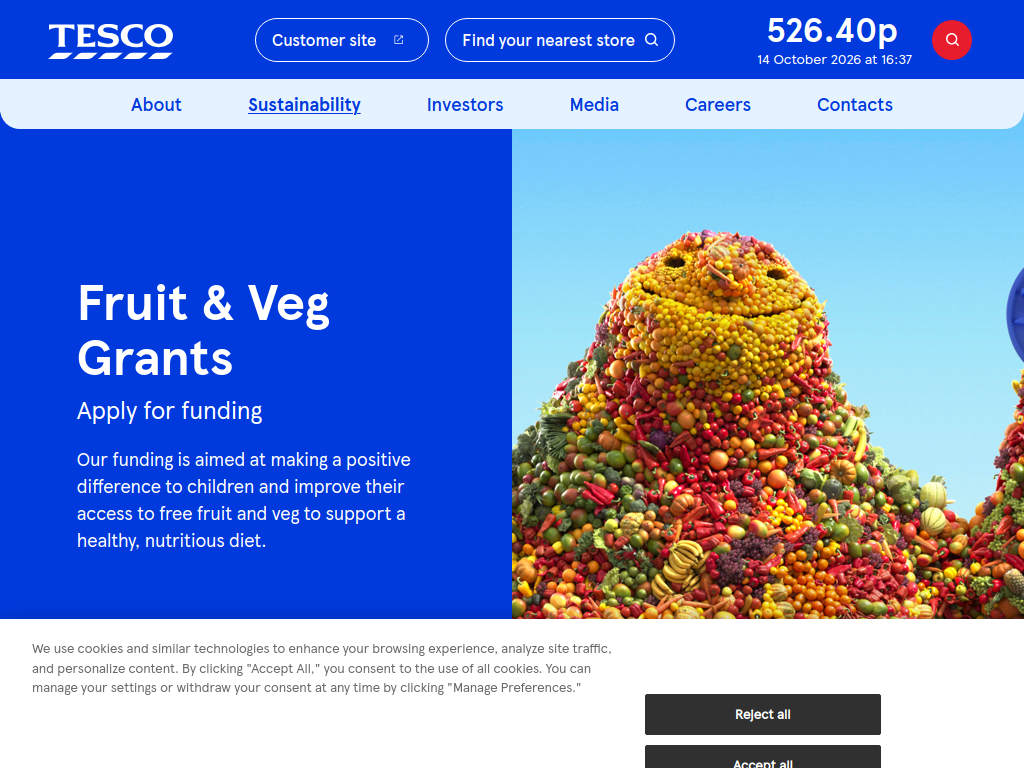
Up to £1,500 for Children's Healthy Eating & Community Food Projects – Tesco Fruit & Veg Grants
Tesco Fruit & Veg Grants, delivered in partnership with Groundwork, provides funding of up to £1,500 to schools, charities and not-for-profit organisations supporting children and young people across the UK.
The programme aims to improve children's access to free fruit and vegetables, encourage healthier eating habits and support community projects that make nutritious food more accessible.
Here's what you can expect:
Up to £1,500 in grant funding per project
Three local organisations selected for each Tesco customer voting round
£1,500, £1,000 or £500 awarded depending on customer votes
New customer voting rounds every four months
Funding for healthy food, fruit and vegetables
Support for breakfast clubs, holiday clubs and after-school activities
Funding for community cooking and gardening projects
Opportunities to tackle food insecurity and holiday hunger
No match funding required
Funding can cover up to 100% of eligible project costs
What projects can be funded?
Tesco welcomes applications for projects that improve children's access to healthy food, including:
Breakfast & After-School Clubs: Providing fruit, vegetables and nutritious snacks to pupils
Holiday Clubs: Offering healthy meals and snacks during school holidays
Community Gardening: Teaching children how to grow their own fruit and vegetables
Cooking Workshops: Helping young people and families learn to prepare affordable, healthy meals
Youth & Sports Clubs: Providing nutritious food during activities and sports sessions
SEND Support: Delivering healthy food initiatives for children with additional needs
Foodbanks: Supporting families experiencing food insecurity
Healthy Eating Education: Encouraging children to develop positive eating habits
Who can apply?
Eligible applicants include:
Schools and Parent Teacher Associations (PTAs)
Registered charities
Voluntary and community organisations
Not-for-profit organisations
Social enterprises
Community Interest Companies (CICs), subject to restrictions
Youth and sports clubs
Scouts, Guides, Cadets and other uniformed groups
Nurseries and playgroups
Parish and town councils
Community groups supporting children and young people
Important eligibility requirements:
Projects must benefit children and young people in the UK.
Activities should improve access to healthy food, particularly fruit and vegetables.
Applicants must identify their local Tesco store when applying.
CICs limited by guarantee must have been operating for at least two years.
CICs limited by shares are not eligible.
Profit-making organisations and individuals cannot apply.
Funding cannot be used for general organisational overheads, activities that have already taken place, political or religious campaigning, fundraising events or overseas projects.
How does the funding work?
Eligible projects are assessed and shortlisted for Tesco's in-store blue token customer vote.
Every four months, three local projects are selected to participate.
Customers vote for their preferred project, determining which organisation receives:
1st Place: £1,500
2nd Place: £1,000
3rd Place: £500
All three shortlisted projects receive funding.
Funding: £500–£1,500 per successful project
Deadline: Rolling applications
-
Up to $20,000 for Startups Tackling Global Poverty – D-Prize 2026
The D-Prize Global Competition 2026 is offering up to $20,000 in seed funding to aspiring entrepreneurs developing new organisations that can deliver proven poverty solutions to underserved communities.
The programme focuses on solving the last-mile distribution problem, helping existing, evidence-based interventions reach people who need them most.
Rather than funding the invention of new products, D-Prize supports entrepreneurs who can create scalable businesses, charities or social enterprises to distribute solutions that already work.
Here's what you can expect:
Up to $20,000 in seed funding
Funding to launch a new organisation
Support for an initial three-month pilot
Opportunities for first-time entrepreneurs
Funding for nonprofit and for-profit ventures
Access to a global network of social entrepreneurs
Potential support with securing further funding after a successful pilot
Opportunities to develop scalable solutions that reach thousands or millions of people
What projects can be funded?
D-Prize supports distribution-focused projects addressing poverty through proven interventions in areas such as:
Healthcare: Improving access to essential treatments, medicines and preventative healthcare
Education: Helping underserved communities access effective educational solutions
Agriculture: Distributing proven technologies and services that improve agricultural productivity
Clean Water: Expanding access to safe drinking water and water treatment solutions
Livelihoods: Helping people access tools and opportunities that improve their incomes
Public Services: Making essential services more accessible to underserved populations
Applicants can choose from D-Prize's published challenges or propose a Custom Intervention supported by credible evidence.
Who can apply?
Aspiring entrepreneurs from around the world
First-time founders
Individuals or teams planning to launch a new organisation
Entrepreneurs establishing nonprofits, NGOs or for-profit businesses
Founders developing scalable solutions to poverty
Applicants from low- and middle-income countries, who are particularly encouraged to apply
Applicants should generally:
Be launching a new organisation or operating at a very early stage
Have a clear plan for distributing an existing, proven intervention
Demonstrate how their solution could eventually reach large numbers of people
Be prepared to commit significant time to launching and growing the organisation
Have a realistic plan for implementing and evaluating an initial pilot
Organisations with more than 18 months of full-time operations or more than $30,000 in funding already raised are typically not supported.
Existing organisations may only be considered where their core focus is distributing a proven, evidence-based poverty intervention.
How to apply:
The selection process involves three stages:
Round 1: Submit a two-page concept note and founder CVs.
Round 2: Approximately 5% of applicants are invited to answer additional written questions.
Final Round: Shortlisted entrepreneurs complete interviews, with approximately 1% receiving funding.
Funding: Up to $20,000 per successful venture
Early Submission Deadline: 25 October 2026
-
EU Funding Opportunities for Startups & Innovative Businesses – European Commission
The European Commission's Funding & Tenders Portal provides access to funding opportunities for startups, SMEs, entrepreneurs and organisations developing innovative projects across Europe.
The portal brings together funding calls from different EU programmes, helping businesses discover financial support for research, technology development, sustainability, digital transformation and international collaboration.
Here's what you can expect:
Access to EU grant and funding opportunities
Funding calls for startups and small businesses
Opportunities supporting research and innovation
Funding for technology development and commercialisation
Support for collaborative projects and international partnerships
Opportunities focused on climate action, sustainability and digital technologies
Access to official application guidance and supporting documents
Search filters for funding programmes, application deadlines and submission status
What types of projects can receive funding?
Funding opportunities may support:
Artificial Intelligence & Digital Innovation: Developing new technologies and digital solutions
Research & Development: Testing and advancing innovative products and services
Green Technology: Supporting sustainability, clean energy and environmental innovation
Healthcare & Life Sciences: Developing medical technologies and healthcare solutions
Advanced Manufacturing: Supporting industrial innovation and emerging technologies
Startup Growth: Helping innovative businesses develop and expand
International Collaboration: Building partnerships between organisations across different countries
Who can apply?
Eligibility varies depending on the individual funding call, but opportunities may be available to:
Startups and early-stage businesses
Small and medium-sized enterprises (SMEs)
Technology and innovation companies
Universities and research institutions
Social enterprises
Nonprofit organisations
Public-sector organisations
International research and innovation partnerships
Some opportunities require applicants to form a consortium with organisations from multiple eligible countries.
UK organisations may be eligible for certain EU funding programmes, including relevant Horizon Europe opportunities, but eligibility must be checked against each individual call.
Funding: Varies by opportunity. There is no single grant amount available through the portal.
Deadline: Multiple deadlines throughout the year.
-
Up to £611 Million for International Science, Research & Innovation – UK Government
The International Science Partnerships Fund (ISPF) is a major UK government funding programme supporting international collaboration in science, research, technology and innovation.
With up to £611 million allocated between 2026–27 and 2029–30, the programme aims to accelerate scientific breakthroughs, strengthen international partnerships and support the development of emerging technologies.
Funding is delivered through UK research and innovation organisations, with individual opportunities opening throughout the programme.
Here's what you can expect:
Up to £611 million in total programme funding
Up to £285 million dedicated to Official Development Assistance (ODA)
Funding for international research and innovation partnerships
Support for developing and commercialising emerging technologies
Opportunities for collaborative research between UK and international institutions
Support for research capacity building and knowledge exchange
Funding to address shared global challenges
Opportunities to strengthen international science and technology networks
Individual grants and programmes delivered through established UK funding organisations
What projects can be funded?
The programme supports international collaboration across priority areas including:
Artificial Intelligence: Advancing AI research, innovation and responsible technology development
Clean Energy: Supporting technologies that contribute to cleaner and more sustainable energy systems
Climate and Weather: Improving climate science, forecasting and resilience
Quantum Technologies: Developing next-generation quantum research and applications
Semiconductors: Advancing research and innovation in semiconductor technologies
Engineering Biology: Supporting biological research and emerging applications
Advanced Communications: Developing future communications technologies
Advanced Materials: Supporting new materials and innovative applications
Research Capacity Building: Strengthening skills, institutions and international research capabilities
Who can apply?
Eligibility depends on the specific funding call, but opportunities may be relevant to:
UK universities and research institutions
Researchers and academic teams
Technology and innovation organisations
Businesses involved in research and development
International research partners
Scientific institutions and specialist organisations
Collaborative partnerships between UK and overseas organisations
UK-based researchers and innovators are a primary audience for many ISPF opportunities.
International organisations may also participate where permitted by the individual funding call.
How is the funding delivered?
The programme works through established organisations, including:
UK Research and Innovation (UKRI)
Innovate UK
British Council
The Royal Society
Royal Academy of Engineering
The British Academy
Academy of Medical Sciences
National Physical Laboratory
Met Office
Universities UK International
Each organisation publishes its own funding opportunities, application requirements and deadlines.
Funding: Up to £611 million overall, including up to £285 million for international development-related activities.
Individual grant amounts vary by funding call.
Programme Period: 2026–27 to 2029–30
-
Up to £500,000 for Innovative Children's Play & Development Projects – Innovate UK
Innovate UK, through UK Research and Innovation (UKRI), is offering up to £500,000 per project through its Contracts for Innovation: Innovation in Play to Improve Child Outcomes competition.
The programme aims to support organisations developing practical, innovative solutions that improve children's access to high-quality, real-world play experiences, helping strengthen learning, development, health and wellbeing.
Here's what you can expect:
£200,000–£500,000 in funding per project
£3 million total competition funding
Up to 15 projects expected to receive contracts
Funding for 12-month projects
Support for developing, testing and evaluating innovative approaches to play
Opportunities to improve access to play for disadvantaged and underserved children
Funding for inclusive play environments and community-based initiatives
Support for new services, delivery models and partnerships
Potential opportunities for further development funding in later phases
What projects can be funded?
Projects must address at least one of five themes:
Expanding Access to Play: Reducing barriers that prevent children from accessing safe, inclusive and enriching play opportunities.
Enhancing Play Experiences: Developing innovative activities and environments that encourage creativity, social interaction and emotional development.
Supporting Parents, Educators and Communities: Helping adults create more meaningful play experiences for children.
Play During Life Transitions: Supporting children through developmental milestones and significant life changes.
Systems and Service Innovation: Integrating play into education, healthcare, family support and community services.
The competition focuses on real-world, face-to-face play, rather than screen-based activities.
Who can apply?
Organisations of any size
UK businesses and organisations
International organisations, including those based in the EU and EEA
Social enterprises and third-sector organisations
Charities and voluntary organisations
Organisations working with specialist subcontractors, including research institutions and community organisations
Applicants must:
Deliver the majority of project activities within the UK
Spend most of the funding within the UK
Ensure UK children and families benefit from the proposed solution
Demonstrate a clear and innovative approach to improving children's outcomes
Include a practical development, piloting or testing component
Provide a clear plan for measuring impact
Have appropriate safeguarding arrangements
Allocate at least 50% of the contract value to research and development activities
Projects focused primarily on AI, mobile apps, virtual reality, screen-based play or conventional consumer toy development are not eligible.
Funding: £200,000–£500,000 per project, inclusive of VAT.
Project Duration: 12 months, from 1 February 2027 to 31 January 2028.
Deadline: 28 October 2026 at 11:00am UK time
-
Up to £60,000 for Civil Society & Social Change Projects – Commonwealth Foundation
The Commonwealth Foundation 2026–2027 Annual Grants Call is offering funding to civil society organisations, networks, coalitions and creative organisations working to create meaningful social, cultural and political change across the Commonwealth.
Projects must use constructive engagement with governments and other decision-makers and/or creative advocacy to influence policy, public discourse, behaviours or decision-making.
Here’s what you can expect:
Up to £60,000 in total funding through the Individual Organisation Grant
Grants of £15,000–£30,000 per year for up to two years
A new Collective Action Grant offering £15,000–£20,000 per year for up to two years
Funding for projects influencing policy and decision-making
Support for advocacy and civic participation
Opportunities for projects using arts and creative expression to drive social or political change
Funding for projects strengthening the voices and participation of marginalised communities
Applications from youth-led organisations are encouraged
Applications from organisations in Commonwealth small states are strongly encouraged
Projects must address at least one of three main funding priorities:
Climate and environmental justice
Economic inclusion
Freedom of expression
All projects must also demonstrate how gender and intersectionality have informed the project's design and will be integrated throughout its implementation.
Who can apply?
For the Individual Organisation Grants:
Registered not-for-profit civil society organisations
Creative organisations
Organisations registered in an eligible Commonwealth Foundation member country
Organisations operating for at least three years
Organisations with at least three years' relevant experience
Organisations with significant experience working with the communities involved in the proposed project
Organisations with an average annual income of less than £2.5 million over the previous two years
For the Collective Action Grants:
Civil society networks
Coalitions and alliances
Platforms of civil society organisations
Community-based organisation networks
Creative collectives
Groups of creative and civil society actors working collaboratively
Unregistered networks and collectives can apply, but a registered civil society organisation within the collective must act as the lead applicant.
The requested grant cannot exceed 70% of the applicant or lead organisation's average annual income over the previous two years.
Projects must be implemented at minimum in the applicant or lead organisation's country of registration, although eligible multi-country projects are also possible.
⚠️ UK organisations cannot apply as the lead applicant. The UK is listed as an eligible Commonwealth country for participation, but organisations registered in the UK are not eligible to lead an application. The same restriction applies to Australia, Canada and New Zealand.
The Foundation will not fund straightforward service-delivery projects, such as distributing medicines, constructing facilities or installing water pumps. Projects need a clear advocacy, participation, policy or social-change element.
Funding:
Individual Organisation Grants: £15,000–£30,000 per year for up to two years — up to £60,000 total
Collective Action Grants: £15,000–£20,000 per year for up to two years — up to £40,000 total
Deadline: 🚨 26 October 2026 at 1pm GMT
-
Up to $200,000+ for Tech-Based Solutions Tackling Global Challenges – MIT Solve
MIT Solve's 2027 Global Challenges are offering funding and extensive support to innovators developing technology-based solutions to some of the world's biggest social and environmental problems.
Successful applicants can become part of MIT Solve's global Solver community, receive guaranteed grant funding and potentially qualify for substantial additional prizes from Solve's funding partners.
Here’s what you can expect:
$10,000 grant for every team selected as a Solver
Additional prizes worth up to $200,000
Multiple funding opportunities available across the 2027 Challenges
Access to MIT's global innovation ecosystem
Connections with investors, funders and industry leaders
Mentorship and strategic support
Opportunities to build partnerships and secure further funding
Exposure through MIT Solve's international network
Support designed to help successful solutions grow and scale their impact
Additional prizes currently include opportunities such as:
Up to $200,000 – Community Catalyst Prize
Up to $150,000 – AI for Humanity Prize
$150,000 – Climate-Positive and Equitable Food Systems Prize
Up to $100,000 – Crescent Enterprises AI for Social Innovation Prize
$100,000 – E Ink Innovation Prize
Up to $100,000 – Ocean Innovation Prize
Up to $100,000 – Schmidt Marine Wavemaker's Prize
$100,000 – Citizens Workforce Innovation Prize
Eligibility for these additional prizes varies depending on the project's sector, geography and technology.
Who can apply?
MIT Solve's Global Challenges are designed to be highly accessible and applications can come from innovators around the world.
Applicants can include:
Entrepreneurs and startup founders
Nonprofit organisations
For-profit organisations
Social enterprises
Researchers and innovators
Community-based organisations
Individuals
Teams developing innovative solutions
Applicants can submit their solution individually or as part of a team.
Solutions should use technology and innovation to address a significant social or environmental problem and demonstrate the potential to grow their impact.
The 2027 challenges focus on major areas including:
Economic prosperity
Climate
Health
Learning
Indigenous communities
For example, the 2027 Global Economic Prosperity Challenge is seeking solutions that expand access to quality work, affordable housing and financial resilience.
Solutions do not necessarily need to be fully scaled already. MIT Solve's 2027 Global Challenges have broader eligibility for earlier-stage solutions, giving emerging innovators an opportunity to apply.
Funding: $10,000 guaranteed grant for each selected Solver team, with eligible teams able to receive additional prizes of up to $200,000.
Deadline: 🚨 2 November 2026 at 12:00pm EST
-
Up to $300,000 for Early-Stage Social Impact Organisations – DRK Foundation
The Draper Richards Kaplan Foundation (DRK) provides substantial, long-term funding and hands-on support to early-stage social enterprises developing innovative and scalable solutions to major social and environmental challenges.
DRK specifically looks for organisations that have moved beyond the idea stage, demonstrated that their solution works through an initial pilot and are now preparing to significantly scale their impact.
Here’s what you can expect:
Up to $300,000 in unrestricted funding or investment capital
Funding provided over a three-year period
Funding usually distributed in multiple tranches
Potentially up to $500,000 worth of additional in-kind support
Hands-on organisational and strategic support
A senior DRK team member taking a board service role for three years
Support with fundraising and financial sustainability
Leadership and board development
Help developing a strategy for scaling your organisation
Talent and organisational development support
Access to DRK's international community of social entrepreneurs
Annual portfolio and alumni gatherings
Support designed around the individual needs of each organisation
Who can apply?
DRK supports both nonprofit and for-profit social enterprises.
Strong applicants are typically:
Early-stage organisations that are post-pilot but pre-scale
Organisations whose product, programme or service is already being used in the real world
Organisations with early evidence demonstrating positive impact
Organisations primarily supporting vulnerable, marginalised or underserved communities
Social enterprises developing innovative solutions to major social or environmental problems
Organisations with a clear and realistic pathway to significant scale
Organisations with one or more founders working full-time or intending to become full-time
Organisations with leadership teams that have a deep understanding of the communities and problems they are addressing
Organisations willing to work closely with DRK throughout the three-year partnership
DRK typically looks for relatively young organisations, ideally around 2–5 years old, although this is not a strict eligibility requirement.
Funding is primarily available to organisations operating in Africa, Europe, India and the United States, with some organisations in Latin America considered occasionally.
For-profit organisations are generally expected to be around Seed to Series A stage.
DRK does not fund organisations that are still at the idea or pre-pilot stage, organisations that have progressed beyond Series A, or solutions that do not predominantly benefit underserved communities.
Funding: Up to $300,000 over three years through unrestricted grant funding or investment capital, plus potentially up to $500,000 worth of in-kind organisational support.
Deadline: No deadline – applications are accepted year-round.