_db33a8.png)


Grants
489 links
-

Green Heat Network Fund
Fund Purpose: The Green Heat Network Fund (GHNF) is designed to support the development of low and zero-carbon heat networks in England and Wales. It aims to accelerate the decarbonization of the heating sector by providing funding for feasibility studies and capital investments in heat network projects.
Application Process: The fund is open to local authorities, public sector bodies, and private sector organizations planning heat network projects. Applicants must submit a feasibility study or a business case demonstrating the viability and benefits of their proposed heat network project. Successful applicants may receive funding for up to 50% of eligible project costs.
Eligibility Criteria: Eligible projects must deliver low or zero-carbon heat, contribute to local carbon reduction targets, and demonstrate value for money. Priority will be given to projects that align with government objectives for decarbonizing heat and reducing greenhouse gas emissions. Applicants must adhere to specific application guidelines outlined in the GHNF documentation.
Overall, the GHNF aims to support the expansion of sustainable heating infrastructure and accelerate the transition to greener, more environmentally friendly heat networks.
-
NERC urgency funding
The NERC Urgency Funding programme, provided by the Natural Environment Research Council (NERC), offers rapid financial support for urgent environmental research projects. This funding is designed to help researchers respond quickly to unexpected events where a rapid scientific response is essential to capture critical data. Whether it’s a natural disaster, a significant environmental incident, or a unique, short-lived opportunity, NERC Urgency Funding ensures that researchers have the resources they need to act swiftly.
About NERC Urgency Funding
The NERC Urgency Funding programme provides financial support for research projects that address time-sensitive environmental issues. The fund is focused on:
Responding to Environmental Emergencies: Offering rapid support to researchers responding to urgent environmental events such as natural disasters, ecological disturbances, or sudden environmental changes. Capturing Critical Data: Ensuring that researchers can collect and analyse data during short-lived events, which may have long-term impacts on ecosystems, biodiversity, or climate. Supporting Rapid Research Mobilisation: Helping research teams quickly mobilise resources, equipment, and personnel to respond to emerging environmental situations. This funding ensures that researchers can respond to environmental challenges and seize opportunities to collect data that may not be available later.
Key Benefits of NERC Urgency Funding
Rapid Response to Environmental Events: The fund is specifically designed for projects that require immediate action, allowing researchers to capture valuable data during time-sensitive events. Support for Unexpected Research Opportunities: Researchers can access financial support for events that are unforeseen but present a unique opportunity for environmental research. Enhancing Environmental Knowledge: By enabling rapid data collection, NERC Urgency Funding contributes to a better understanding of environmental processes, biodiversity, and the impact of natural disasters or ecological changes. Collaboration and Coordination: The fund encourages collaboration between research institutions, ensuring that the best teams are quickly mobilised to address urgent environmental challenges. Eligibility Criteria for NERC Urgency Funding
To qualify for NERC Urgency Funding, applicants must meet the following criteria:
UK-Based Researchers: The fund is open to UK-based research teams from universities, research institutions, and organisations involved in environmental science. Time-Sensitive Environmental Events: Projects must address a time-sensitive event that requires immediate scientific attention, such as a natural disaster, a rare ecological occurrence, or an environmental crisis. Rapid Mobilisation of Resources: Applicants must demonstrate the ability to quickly mobilise resources, including personnel, equipment, and fieldwork, to respond to the urgent situation. Funding Opportunities
The NERC Urgency Funding programme provides financial support for a range of time-sensitive environmental research activities, including:
Fieldwork and Data Collection: Funding for immediate fieldwork and data collection during environmental incidents or emergencies. Rapid Deployment of Research Teams: Support for the quick mobilisation of research teams, equipment, and resources to respond to urgent environmental challenges. Data Analysis and Reporting: Financial assistance for the analysis and interpretation of data collected during urgent events, ensuring that the findings are reported and shared in a timely manner. How to Apply for NERC Urgency Funding
If you are interested in applying for NERC Urgency Funding, follow these steps:
Identify a Time-Sensitive Event: Ensure that the environmental event or incident requires rapid scientific response and is aligned with NERC’s funding priorities. Develop a Proposal: Outline the research objectives, the urgency of the situation, and how the funding will support rapid data collection and analysis. Submit Your Application: Applications can be submitted through the NERC funding portal. Be sure to include a detailed project plan, budget, and timeline that reflects the urgency of the event. For more information on application deadlines and eligibility, visit the official NERC website or contact the funding body for guidance.
Supporting Rapid Response Environmental Research
The NERC Urgency Funding programme plays a crucial role in ensuring that researchers can respond to environmental challenges and emergencies in real-time. By providing rapid financial support, this programme allows researchers to capture critical data and contribute valuable insights into the understanding of environmental processes and the impact of unforeseen events.
-

Woodland Creation Planning Grant
The Woodland Creation Planning Grant (WCPG) is a government initiative designed to support landowners and farmers in planning sustainable woodland creation projects. This grant provides financial assistance to help cover the costs of preparing high-quality, detailed woodland creation plans that meet the UK Forestry Standard. The goal is to encourage the development of new woodland areas across the UK, contributing to environmental sustainability, biodiversity, and carbon sequestration.
About the Woodland Creation Planning Grant (WCPG)
The WCPG aims to support landowners by providing funding for the essential planning stages of woodland creation projects. The grant covers the cost of expert advice, surveys, and planning services that help ensure woodland projects are viable, sustainable, and compliant with UK standards. Key objectives of the WCPG include:
Promoting Sustainable Forestry: Helping landowners plan woodlands that contribute to environmental sustainability, carbon capture, and biodiversity. Supporting Biodiversity: Ensuring that new woodlands are designed to enhance wildlife habitats and improve biodiversity. Compliance with UK Forestry Standards: Providing funding to develop woodland plans that meet the UK Forestry Standard, ensuring best practices in woodland creation and management. Key Benefits of the Woodland Creation Planning Grant
Funding for Woodland Planning: Financial assistance to cover the costs of planning, including expert advice, site surveys, and the preparation of detailed woodland creation plans. Environmental and Economic Impact: Woodland creation projects contribute to carbon capture, biodiversity, and rural economic development, offering long-term environmental and financial benefits. Expert Guidance: The grant supports landowners in accessing expert advice and technical assistance, ensuring that their woodland projects are well-planned and meet national standards. Support for Large-Scale Projects: The WCPG is particularly aimed at supporting larger woodland projects, typically over 5 hectares, that require comprehensive planning. Eligibility Criteria for the Woodland Creation Planning Grant
To qualify for the Woodland Creation Planning Grant, applicants must meet the following criteria:
UK-Based Landowners and Farmers: The grant is open to landowners and farmers in the UK who are planning to create new woodland areas. Project Size: The grant is aimed at larger woodland creation projects, typically over 5 hectares in size. Compliance with Standards: Projects must be designed to meet the UK Forestry Standard and demonstrate long-term sustainability. Funding Opportunities
The WCPG provides funding to help landowners develop high-quality woodland creation plans. The grant covers:
Site Surveys and Assessments: Funding for environmental surveys, soil assessments, and other necessary site evaluations. Expert Advice and Planning: Financial support for professional forestry consultants and planners who help design sustainable woodland creation plans. Preparation of Woodland Creation Plans: Funding for the preparation of detailed plans that outline the objectives, management strategies, and environmental impact of the proposed woodland. How to Apply for the Woodland Creation Planning Grant
If you are interested in applying for the Woodland Creation Planning Grant, follow these steps:
Prepare a Project Overview: Outline your woodland creation project, including the size of the land, your objectives, and how the project will contribute to sustainability and biodiversity. Engage with a Forestry Consultant: Work with a forestry expert to develop a detailed woodland creation plan that meets the UK Forestry Standard. Submit Your Application: Applications can be submitted through the WCPG portal. Be sure to include a project proposal, budget, and timeline for developing your woodland creation plan. For more details on application deadlines and eligibility criteria, visit the official Woodland Creation Planning Grant website or contact the grant administrators for assistance.
Building a Greener Future with Woodland Creation
The Woodland Creation Planning Grant plays a vital role in promoting sustainable forestry and environmental stewardship in the UK. By supporting the planning of new woodlands, the WCPG helps landowners create valuable ecosystems that contribute to biodiversity, carbon capture, and rural development.
-

Woodland Economy Grant
The Woodland Economy Grant is a vital initiative aimed at promoting sustainable forestry management while supporting the economic growth of rural communities. This grant provides financial assistance to landowners, farmers, and businesses engaged in woodland management, timber production, and forestry-related enterprises. The goal is to enhance the environmental, economic, and social benefits of woodland areas across the UK by encouraging sustainable practices that contribute to rural development and biodiversity.
About the Woodland Economy Grant
The Woodland Economy Grant supports projects that aim to:
Enhance Sustainable Woodland Management: Encouraging the use of sustainable forestry practices that protect the environment, enhance biodiversity, and promote long-term productivity. Support Rural Economies: Boosting economic opportunities in rural areas by supporting forestry-related businesses, timber production, and woodland-based enterprises. Promote Renewable Resources: Supporting the use of wood as a renewable energy source, encouraging projects focused on woodfuel production, biomass, and timber processing. Conserve Woodland Habitats: Enhancing the ecological value of woodland areas by supporting conservation efforts, reforestation, and the protection of wildlife habitats. Key Benefits of the Woodland Economy Grant
Financial Support for Woodland Projects: Access to grants that help cover the costs of sustainable woodland management, timber production, and forestry business development. Rural Economic Development: The grant helps create jobs and economic opportunities in rural areas, supporting businesses that rely on woodland resources. Environmental Benefits: Projects funded through the grant contribute to biodiversity, carbon sequestration, and the sustainable use of natural resources. Renewable Energy Production: Encouraging the use of woodland resources for renewable energy projects, including woodfuel and biomass production, which help reduce carbon emissions. Eligibility Criteria for the Woodland Economy Grant
To qualify for the Woodland Economy Grant, applicants must meet the following criteria:
UK-Based Landowners and Businesses: The grant is open to landowners, farmers, forestry businesses, and rural enterprises in the UK. Woodland or Forestry Focus: Projects must focus on woodland management, timber production, or related forestry activities that contribute to economic growth and environmental sustainability. Sustainability and Conservation: Proposals should demonstrate a commitment to sustainable practices and the protection of woodland ecosystems. Funding Opportunities
The Woodland Economy Grant provides funding for a variety of forestry-related activities, including:
Timber Production and Processing: Financial support for businesses involved in the harvesting, processing, and sale of timber and woodland products. Sustainable Woodland Management: Grants for projects that enhance the sustainable management of woodland areas, including planting, thinning, and biodiversity conservation. Woodfuel and Biomass Projects: Funding for renewable energy projects that use wood as a sustainable fuel source, including biomass boilers and woodfuel processing facilities. Rural Business Development: Support for rural enterprises that utilise woodland resources to create economic opportunities, such as eco-tourism, forestry schools, and woodland-based crafts. How to Apply for the Woodland Economy Grant
If you are interested in applying for the Woodland Economy Grant, follow these steps:
Develop a Project Proposal: Outline your project’s goals, how it will contribute to sustainable woodland management or economic growth, and the expected environmental impact. Ensure Eligibility: Confirm that your project aligns with the grant’s objectives, including sustainable forestry practices, renewable energy production, or rural business development. Submit Your Application: Applications can be submitted through the Woodland Economy Grant portal. Be sure to include a detailed project plan, budget, and timeline. For more information on application deadlines and funding guidelines, visit the official Woodland Economy Grant website or contact the grant administrators.
Sustaining the Future of the Woodland Economy
The Woodland Economy Grant is an essential resource for landowners, farmers, and businesses looking to contribute to sustainable forestry and rural economic development. By supporting projects that balance economic growth with environmental stewardship, this grant plays a crucial role in preserving the UK’s woodland resources for future generations.
-

Tackling Obesity
The Tackling Obesity initiative is designed to address one of the most pressing public health challenges in the UK—obesity. This programme supports research, community projects, and public health campaigns that aim to reduce obesity rates and promote healthier lifestyles across the population. By providing funding and resources to local organisations, healthcare providers, and researchers, the Tackling Obesity initiative helps to create sustainable change in eating habits, physical activity, and overall health.
About the Tackling Obesity Initiative
The Tackling Obesity programme focuses on preventing and reducing obesity by addressing its root causes, including unhealthy diets, sedentary lifestyles, and lack of access to physical activity opportunities. Key areas of focus include:
Public Health Campaigns: Supporting initiatives that raise awareness about the risks of obesity and encourage healthier choices in nutrition and physical activity. Community-Based Programmes: Funding local projects that promote exercise, nutrition education, and accessible healthcare services for people at risk of obesity. Research and Innovation: Supporting scientific research aimed at understanding the causes of obesity and developing innovative interventions to combat it. Childhood Obesity Prevention: A particular focus on reducing childhood obesity by working with schools, parents, and community organisations to promote healthier habits from an early age. Key Benefits of the Tackling Obesity Programme
Improved Health Outcomes: The programme aims to reduce obesity-related health conditions such as diabetes, heart disease, and certain cancers by promoting healthier lifestyle choices. Community Support: Tackling Obesity helps empower communities to create sustainable, localised health initiatives that make a lasting impact on residents’ well-being. Funding for Research: The programme provides grants to researchers and healthcare organisations working to develop new approaches for obesity prevention and treatment. Collaboration Opportunities: The initiative encourages collaboration between public health bodies, local councils, schools, and healthcare providers to create holistic strategies for tackling obesity. Eligibility Criteria for the Tackling Obesity Programme
To qualify for Tackling Obesity funding, applicants must meet the following criteria:
UK-Based Organisations: The fund is open to healthcare providers, research institutions, non-profit organisations, and local councils based in the UK. Focus on Obesity Prevention: Projects must focus on preventing or reducing obesity through education, research, public health campaigns, or community-based interventions. Community Impact: Proposals should demonstrate a clear plan for how the project will positively impact the community and contribute to long-term reductions in obesity rates. Funding Opportunities
The Tackling Obesity programme offers financial support for a range of initiatives, including:
Public Health Education Campaigns: Funding for initiatives that promote healthier eating, regular physical activity, and awareness about the risks of obesity. Community Fitness Programmes: Support for projects that create accessible exercise programmes in local communities, especially in areas with high obesity rates. School-Based Initiatives: Grants for schools to implement programmes that encourage healthy eating and physical activity among children. Research Grants: Funding for scientific research aimed at understanding the causes of obesity and developing effective interventions. How to Apply for Tackling Obesity Funding
If you are interested in applying for Tackling Obesity funding, follow these steps:
Develop a Proposal: Outline your project’s goals, target audience, and how it will contribute to reducing obesity rates or promoting healthier lifestyles. Collaborate with Partners: Where possible, form partnerships with local councils, schools, or healthcare providers to enhance the reach and effectiveness of your project. Submit Your Application: Applications can be submitted through the Tackling Obesity funding portal. Be sure to include a detailed budget, timeline, and expected outcomes. For more information on application deadlines and funding guidelines, visit the official Tackling Obesity website or contact the programme administrators.
Creating Healthier Communities Together
The Tackling Obesity initiative plays a vital role in promoting healthier living across the UK. By supporting public health campaigns, community programmes, and cutting-edge research, this initiative aims to reduce obesity rates, improve health outcomes, and create sustainable change for future generations.
-

UKRI - Biotechnology and Biological Sciences Research Counci
The UKRI Biotechnology and Biological Sciences Research Council (BBSRC) is a leading funding body in the UK, supporting cutting-edge research in the fields of biotechnology and the biological sciences. As part of UK Research and Innovation (UKRI), BBSRC funds world-class research that drives innovation in areas such as agriculture, health, food security, bioenergy, and biotechnology. By supporting a wide range of scientific projects, BBSRC plays a pivotal role in addressing global challenges and enhancing the UK’s position as a leader in the life sciences.
About the BBSRC
The BBSRC is committed to advancing research that delivers impactful solutions to real-world challenges. Key areas of focus include:
Agriculture and Food Security: Supporting research that improves crop yields, pest control, and food production to ensure global food security. Bioscience for Health: Funding projects that explore the biological mechanisms underlying health and disease, contributing to advancements in human and animal health. Industrial Biotechnology and Bioenergy: Promoting innovation in sustainable technologies, biofuels, and bioproducts that reduce environmental impact and support the bioeconomy. Understanding Living Systems: Supporting fundamental bioscience research to improve our understanding of biological processes at all levels. BBSRC works closely with universities, research institutes, and businesses to drive innovation and foster partnerships that accelerate the development of new technologies.
Key Benefits of BBSRC Funding
World-Class Research Funding: Access to significant funding for research projects in the life sciences and biotechnology sectors. Support for Innovation: BBSRC promotes the translation of research into real-world applications, supporting technologies that improve health, agriculture, and sustainability. Collaboration Opportunities: Encourages partnerships between academic institutions, industry leaders, and research organisations to solve complex challenges and promote interdisciplinary research. Addressing Global Challenges: BBSRC-funded research focuses on critical issues such as food security, health, and climate change, ensuring that science contributes to solutions for the global community. Eligibility Criteria for BBSRC Funding
To qualify for BBSRC funding, applicants must meet the following criteria:
UK-Based Researchers: The fund is available to UK-based academic researchers, institutions, and businesses working in biotechnology and biological sciences. Innovative Research Projects: Projects should focus on one of BBSRC’s strategic research priorities, including agriculture, bioscience for health, or industrial biotechnology. Collaborative Potential: Proposals that involve collaboration with other academic institutions, industry partners, or research bodies are encouraged. Funding Opportunities
The BBSRC provides financial support through various funding streams, including:
Research Grants: Funding for individual or collaborative research projects across BBSRC’s key areas of focus. Fellowships: Support for early-career researchers and postdoctoral scientists to advance their independent research careers. Partnership Grants: Funding for projects that foster collaboration between academia, industry, and international research partners. Innovation Grants: Support for the commercialisation of new biotechnologies and the development of innovative products that benefit society. How to Apply for BBSRC Funding
If you’re interested in applying for BBSRC funding, follow these steps:
Develop a Research Proposal: Outline your research objectives, focusing on how your project aligns with BBSRC’s key research areas and addresses global challenges. Collaborate with Partners: Where possible, form partnerships with other research institutions or industry leaders to enhance your project’s impact. Submit Your Application: Applications can be submitted through the UKRI funding portal. Include a detailed research plan, budget, and project timeline. For detailed information on deadlines, eligibility, and guidelines, visit the BBSRC website or contact the funding body for support.
Driving Innovation in Biotechnology and Life Sciences
The UKRI Biotechnology and Biological Sciences Research Council (BBSRC) is at the forefront of supporting research that addresses key challenges in health, agriculture, and sustainability. By providing funding and fostering collaboration, BBSRC empowers researchers to develop innovative solutions that benefit society and drive scientific progress.
-

UKRI - Biotechnology and Biological Sciences Research Counci
The UKRI Biotechnology and Biological Sciences Research Council (BBSRC) is a leading funding body in the UK, supporting cutting-edge research in the fields of biotechnology and the biological sciences. As part of UK Research and Innovation (UKRI), BBSRC funds world-class research that drives innovation in areas such as agriculture, health, food security, bioenergy, and biotechnology. By supporting a wide range of scientific projects, BBSRC plays a pivotal role in addressing global challenges and enhancing the UK’s position as a leader in the life sciences.
About the BBSRC
The BBSRC is committed to advancing research that delivers impactful solutions to real-world challenges. Key areas of focus include:
Agriculture and Food Security: Supporting research that improves crop yields, pest control, and food production to ensure global food security. Bioscience for Health: Funding projects that explore the biological mechanisms underlying health and disease, contributing to advancements in human and animal health. Industrial Biotechnology and Bioenergy: Promoting innovation in sustainable technologies, biofuels, and bioproducts that reduce environmental impact and support the bioeconomy. Understanding Living Systems: Supporting fundamental bioscience research to improve our understanding of biological processes at all levels. BBSRC works closely with universities, research institutes, and businesses to drive innovation and foster partnerships that accelerate the development of new technologies.
Key Benefits of BBSRC Funding
World-Class Research Funding: Access to significant funding for research projects in the life sciences and biotechnology sectors. Support for Innovation: BBSRC promotes the translation of research into real-world applications, supporting technologies that improve health, agriculture, and sustainability. Collaboration Opportunities: Encourages partnerships between academic institutions, industry leaders, and research organisations to solve complex challenges and promote interdisciplinary research. Addressing Global Challenges: BBSRC-funded research focuses on critical issues such as food security, health, and climate change, ensuring that science contributes to solutions for the global community. Eligibility Criteria for BBSRC Funding
To qualify for BBSRC funding, applicants must meet the following criteria:
UK-Based Researchers: The fund is available to UK-based academic researchers, institutions, and businesses working in biotechnology and biological sciences. Innovative Research Projects: Projects should focus on one of BBSRC’s strategic research priorities, including agriculture, bioscience for health, or industrial biotechnology. Collaborative Potential: Proposals that involve collaboration with other academic institutions, industry partners, or research bodies are encouraged. Funding Opportunities
The BBSRC provides financial support through various funding streams, including:
Research Grants: Funding for individual or collaborative research projects across BBSRC’s key areas of focus. Fellowships: Support for early-career researchers and postdoctoral scientists to advance their independent research careers. Partnership Grants: Funding for projects that foster collaboration between academia, industry, and international research partners. Innovation Grants: Support for the commercialisation of new biotechnologies and the development of innovative products that benefit society. How to Apply for BBSRC Funding
If you’re interested in applying for BBSRC funding, follow these steps:
Develop a Research Proposal: Outline your research objectives, focusing on how your project aligns with BBSRC’s key research areas and addresses global challenges. Collaborate with Partners: Where possible, form partnerships with other research institutions or industry leaders to enhance your project’s impact. Submit Your Application: Applications can be submitted through the UKRI funding portal. Include a detailed research plan, budget, and project timeline. For detailed information on deadlines, eligibility, and guidelines, visit the BBSRC website or contact the funding body for support.
Driving Innovation in Biotechnology and Life Sciences
The UKRI Biotechnology and Biological Sciences Research Council (BBSRC) is at the forefront of supporting research that addresses key challenges in health, agriculture, and sustainability. By providing funding and fostering collaboration, BBSRC empowers researchers to develop innovative solutions that benefit society and drive scientific progress.
-

Research England Development Fund
The Research England Development Fund (REDF) is a key funding initiative aimed at fostering research and innovation in higher education institutions across England. Managed by Research England, part of UK Research and Innovation (UKRI), the fund supports strategic projects that enhance research capacity, promote collaboration, and address societal challenges. The fund seeks to strengthen the role of universities and research institutions in driving innovation, supporting economic growth, and delivering public benefits.
About the Research England Development Fund (REDF)
The REDF supports initiatives that help universities and research institutions:
Enhance Research Capacity: Fund projects that develop research infrastructure, improve facilities, and increase research output in key areas. Foster Collaboration: Promote partnerships between universities, businesses, and public sector organisations to address complex societal challenges. Accelerate Innovation: Support research projects that lead to the development of innovative technologies, products, and services. Contribute to National Priorities: Align research efforts with national and regional priorities, including economic development, health, sustainability, and social well-being. The fund encourages cross-sector collaboration and multidisciplinary research, ensuring that higher education institutions play a pivotal role in solving pressing global challenges.
Key Benefits of the Research England Development Fund
Increased Research Capability: Institutions can access funding to build and improve their research infrastructure, enhancing their ability to conduct high-impact research. Collaboration Opportunities: The fund promotes partnerships between universities, industries, and public organisations, enabling collaborative research that benefits both the economy and society. Funding for Strategic Initiatives: Support for initiatives that align with the strategic goals of the institution, the wider research community, and the UK's national research agenda. Societal Impact: The fund encourages research that addresses real-world issues such as climate change, public health, and innovation in digital technologies. Eligibility Criteria for the Research England Development Fund
To be eligible for the Research England Development Fund, applicants must meet the following criteria:
Higher Education Institutions: The fund is open to universities and research institutions based in England. Collaborative Projects: Projects must demonstrate collaboration between academic institutions, businesses, or public organisations. Strategic Alignment: Proposals should align with the institution’s long-term research strategy and contribute to broader national or regional priorities. Funding Opportunities
The REDF provides financial support for a variety of projects, including:
Research Infrastructure Development: Funding for the development of new research facilities, laboratories, or equipment. Collaborative Research Projects: Support for partnerships between universities, industry, and public organisations to solve complex challenges. Capacity Building Initiatives: Grants to help universities develop expertise in emerging research fields and grow their research capabilities. How to Apply for the Research England Development Fund
If you’re interested in applying for REDF funding, follow these steps:
Develop a Strategic Proposal: Outline your project’s objectives, focusing on how it will enhance research capacity, foster collaboration, or contribute to innovation. Collaborate with Partners: Ensure your project involves collaboration with other academic institutions, businesses, or public sector organisations. Submit Your Application: Applications can be submitted through the Research England portal. Be sure to include a detailed project plan, budget, and expected outcomes. For more details on application deadlines and funding guidelines, visit the official Research England website or contact the REDF team for support.
Shaping the Future of Research and Innovation
The Research England Development Fund is an essential resource for higher education institutions looking to expand their research capabilities and drive innovation. By supporting collaborative projects and strategic initiatives, the fund plays a vital role in helping universities contribute to the UK’s research excellence and global competitiveness.
-

UKRI
UK Research and Innovation (UKRI) is a public body that funds research and innovation projects across the UK, driving discoveries and breakthroughs in various sectors, including science, technology, healthcare, the environment, and the creative industries. By supporting cutting-edge research and fostering collaboration between academia, industry, and government, UKRI plays a pivotal role in ensuring the UK remains a global leader in innovation and knowledge.
About UKRI
UKRI brings together nine research councils and funding bodies under one umbrella, coordinating efforts to promote world-class research and innovation. These councils include:
Arts and Humanities Research Council (AHRC) Biotechnology and Biological Sciences Research Council (BBSRC) Engineering and Physical Sciences Research Council (EPSRC) Economic and Social Research Council (ESRC) Medical Research Council (MRC) Natural Environment Research Council (NERC) Science and Technology Facilities Council (STFC) Innovate UK: Supports innovation by helping businesses bring new ideas to the marketplace. UKRI provides a unified framework for funding research across multiple sectors, promoting collaboration, innovation, and excellence across the UK.
Key Benefits of UKRI Funding
Comprehensive Funding Support: UKRI provides financial backing for a wide range of research and innovation projects, from early-stage research to large-scale collaborative efforts. Sector-Specific Funding: Through its research councils, UKRI funds projects in diverse areas such as healthcare, biotechnology, climate science, artificial intelligence, and more. Collaboration and Knowledge Sharing: UKRI fosters collaboration between universities, research institutions, businesses, and government agencies to promote interdisciplinary research and innovation. Driving Innovation: UKRI is dedicated to supporting projects that can lead to commercialisation, helping turn research breakthroughs into real-world solutions and technologies. Who Can Apply for UKRI Funding?
UKRI funding is available to:
Academic Researchers: Universities, higher education institutions, and research groups conducting pioneering research. Industry Innovators: Businesses and startups working on innovative technologies or solutions that align with UKRI’s funding goals. Collaborative Projects: Joint projects that bring together industry, academia, and public sector organisations to address complex challenges through research and development. Funding Opportunities
UKRI offers a variety of funding streams, including:
Research Grants: Support for research projects in areas such as science, technology, and social sciences. Fellowships: Grants for early-career researchers and postdoctoral fellows to advance their careers through independent research. Innovation Funding: Through Innovate UK, UKRI supports businesses in developing new products, processes, and services that drive economic growth. Collaborative Research: Funding for collaborative research initiatives that tackle major societal challenges, including climate change, public health, and digital transformation. How to Apply for UKRI Funding
If you’re interested in applying for UKRI funding, here’s how to get started:
Identify a Research Council: Determine which UKRI council best aligns with your project, whether it’s technology, healthcare, social sciences, or another field. Prepare a Detailed Proposal: Develop a proposal that outlines your research or innovation project, including its objectives, methodology, and expected outcomes. Submit Your Application: Applications can be submitted through the UKRI funding portal. Make sure to include a project timeline, budget, and any required documentation. For more detailed guidance on application deadlines and eligibility, visit the UKRI website or contact the specific research council for your area of focus.
Supporting the Future of Innovation in the UK
UK Research and Innovation (UKRI) is committed to supporting cutting-edge research and fostering innovation across the UK. By providing funding, resources, and collaboration opportunities, UKRI plays a key role in helping researchers, businesses, and institutions turn ideas into impactful, real-world solutions that benefit society and the economy.
-

UKRI - Science & Technologies Facilities Council
The UKRI Science & Technologies Facilities Council (STFC) is a leading UK research organisation dedicated to advancing scientific discovery and innovation in the fields of physics, astronomy, space science, and technology development. As part of UK Research and Innovation (UKRI), STFC provides funding, resources, and access to world-class facilities to support cutting-edge research that drives scientific and technological advancements.
About the STFC
STFC plays a pivotal role in supporting UK research across various scientific disciplines, with a focus on:
Particle Physics and Nuclear Physics: Funding projects that explore the fundamental nature of matter and the forces that govern the universe. Space Science and Astronomy: Supporting research in space exploration, cosmology, and astronomical observations to deepen our understanding of the universe. Innovative Technologies: Investing in the development of advanced technologies, including computing, instrumentation, and engineering, that enable scientific breakthroughs. National and International Collaboration: Facilitating collaborations with universities, research institutes, and global scientific organisations to drive innovation and share knowledge across borders. STFC provides essential infrastructure for research, including particle accelerators, telescopes, and supercomputers, to ensure that UK scientists have the tools they need to lead the way in scientific discovery.
Key Benefits of STFC Funding
Access to World-Class Facilities: Researchers can access cutting-edge facilities and equipment that are critical for conducting advanced scientific research. Funding for Scientific Projects: STFC offers financial support for a wide range of research projects, from theoretical physics to applied technology development. Collaboration Opportunities: The STFC encourages partnerships between academia, industry, and international research bodies, fostering collaboration that drives scientific progress. Innovation and Commercialisation: STFC also supports the commercialisation of technologies developed through research, helping to translate scientific discoveries into real-world applications. Eligibility Criteria for STFC Funding
To apply for STFC funding, applicants must meet the following criteria:
Research Focus: Projects must align with one of STFC’s key areas of research, such as particle physics, nuclear physics, space science, astronomy, or technology development. Collaborative Potential: Applicants are encouraged to collaborate with other research institutions, universities, or industry partners to enhance the impact and scope of their research. UK-Based Researchers: The funding is primarily available to UK-based researchers, institutions, and organisations involved in scientific research and innovation. Funding Opportunities
STFC offers a range of funding opportunities for scientific research, including:
Research Grants: Funding for individual or group research projects in STFC’s key scientific disciplines. Fellowships and Studentships: Financial support for early-career researchers, PhD students, and postdoctoral fellows working on cutting-edge scientific projects. Innovative Technology Grants: Funding for the development of new technologies, tools, and methodologies that advance scientific research. Collaborative Research Programmes: Grants for joint research initiatives between UK-based researchers and international collaborators. How to Apply for STFC Funding
If you are interested in applying for STFC funding, follow these steps:
Identify a Research Area: Determine which of STFC’s key research areas your project aligns with and develop a detailed proposal. Collaborate with Partners: Where possible, form partnerships with other research institutions or industry leaders to strengthen your project’s scope and impact. Submit Your Application: Applications can be submitted through the official UKRI portal. Ensure that your proposal includes a clear research plan, budget, and timeline. For detailed information on application deadlines and funding guidelines, visit the STFC website or contact the grant administrators.
Driving Scientific Discovery and Technological Innovation
The UKRI Science & Technologies Facilities Council (STFC) plays a crucial role in advancing scientific research and technological development in the UK. By providing funding, resources, and access to state-of-the-art facilities, STFC enables researchers to push the boundaries of knowledge and develop technologies that have a lasting impact on society.
-

UK Games Fund
The UK Games Fund is a unique initiative designed to support early-stage independent game developers, offering financial assistance to help bring innovative game ideas to life. This fund is tailored for developers who are passionate about creating original games but need financial backing to move their projects forward. Whether you’re an indie studio or a solo developer, the UK Games Fund provides the opportunity to secure vital funding and mentorship to get your game into production.
About the UK Games Fund
The UK Games Fund is part of a wider strategy to promote the UK as a hub for video game development and creative industries. The fund focuses on:
Early-Stage Game Development: Providing financial support to developers who are in the initial stages of creating their game but need funding to progress. Prototyping and Concept Development: Offering grants to help developers build prototypes or refine their game concepts to attract further investment. Mentorship and Business Support: In addition to funding, the programme offers access to industry mentorship, helping developers navigate the business side of game development, including marketing, production, and distribution. The UK Games Fund helps developers turn their creative ideas into commercial successes, supporting the growth of the UK’s video game industry.
Key Benefits of the UK Games Fund
Funding for Game Development: Developers can access grants to support the early stages of game creation, including prototyping, design, and testing. Industry Expertise: Alongside financial support, developers receive mentorship from seasoned professionals in the gaming industry, providing insights into production, distribution, and marketing strategies. Commercialisation Support: The fund helps indie developers bring their games to market, offering advice on how to make games commercially viable while maintaining creative integrity. Boosting the UK Games Sector: The fund contributes to the growth and innovation of the UK’s game development sector, fostering talent and creativity across the industry. Eligibility Criteria for the UK Games Fund
To be eligible for the UK Games Fund, applicants must meet the following criteria:
UK-Based Developers: The fund is open to game developers who are based in the UK, including both independent studios and solo developers. Early-Stage Projects: The game project must be in its early stages, focusing on concept development, prototyping, or pre-production. Projects should demonstrate creative potential and technical feasibility. Commitment to Commercial Success: Applicants should be able to show how their game could have commercial viability with the help of the fund, whether through further funding, sales, or partnerships. Funding Opportunities
The UK Games Fund offers financial support for a range of game development activities, including:
Prototyping and Concept Development: Grants to help developers build game prototypes, refine gameplay mechanics, or create visual mockups. Technical Development: Financial assistance for developing game engines, coding, and other technical aspects of game creation. Art and Design: Support for artists and designers working on game concepts, characters, and environments. How to Apply for the UK Games Fund
To apply for the UK Games Fund, follow these steps:
Prepare a Game Concept: Develop a detailed game concept, including gameplay mechanics, design elements, and the target audience. Submit a Prototype or Demo: If possible, include a prototype or demo of the game to showcase its potential and gameplay experience. Complete the Application: Submit your application through the UK Games Fund’s official website. Be sure to include a budget outline, project timeline, and information about your team. For more information on application guidelines and deadlines, visit the UK Games Fund website or contact the fund administrators.
Empowering Indie Game Developers in the UK
The UK Games Fund is an invaluable resource for indie developers looking to take their game from concept to reality. By providing financial support, mentorship, and industry insights, the fund plays a crucial role in nurturing creativity and innovation in the UK’s vibrant game development sector. Whether you're building a solo project or an indie studio team, the UK Games Fund can help you achieve your vision and launch your game to the world.
-

Stem Projects
The STEM Projects initiative is dedicated to promoting education and innovation in the fields of Science, Technology, Engineering, and Mathematics (STEM). This programme supports hands-on projects and activities that encourage young people to develop skills and passion for STEM subjects. By partnering with schools, universities, and local organisations, STEM Projects aims to create learning experiences that inspire the next generation of scientists, engineers, and technologists.
About STEM Projects
STEM Projects provides funding and support for educational initiatives that focus on:
Hands-On Learning: Engaging students with practical, project-based learning opportunities that bring STEM subjects to life. Innovation and Creativity: Encouraging students to think creatively and apply STEM knowledge to solve real-world problems. Industry Collaboration: Connecting students with professionals in the STEM fields to offer mentorship, guidance, and real-world insights into careers in science and technology. Diversity in STEM: Promoting inclusion and equal opportunities in STEM education, particularly for underrepresented groups such as women and minority students. The initiative aims to bridge the gap between classroom learning and real-world applications, preparing students for future careers in high-demand STEM fields.
Key Benefits of STEM Projects
Enhanced STEM Education: By providing resources for hands-on learning, STEM Projects helps students gain a deeper understanding of science and technology concepts. Industry Engagement: Projects often involve collaboration with local businesses and universities, giving students a chance to learn directly from experts in STEM fields. Building Future Skills: STEM Projects equip students with the skills they need to thrive in the modern workforce, including critical thinking, problem-solving, and technical abilities. Supporting Diversity: The programme is committed to ensuring that students from all backgrounds have access to high-quality STEM education and opportunities. Who Can Benefit from STEM Projects?
STEM Projects is ideal for:
Schools and Educators: Teachers looking to enhance their STEM curriculum with engaging, hands-on activities and resources. Community Organisations: Non-profits and local groups seeking to inspire young people through STEM-focused programmes and outreach. Students: Young learners who are eager to explore STEM subjects and gain practical experience in fields like robotics, coding, engineering, and environmental science. Universities and Research Institutions: Institutions that want to collaborate on STEM initiatives to engage the community and build pathways to STEM careers. STEM Projects Examples
The STEM Projects initiative has supported various successful projects, including:
Robotics Workshops: Introducing students to the basics of robotics and coding, allowing them to build and programme their own robots. Environmental Science Projects: Engaging students in sustainability projects, such as designing renewable energy systems or exploring climate change solutions. Tech Innovation Challenges: Partnering with local tech companies to host competitions where students develop innovative apps, gadgets, or prototypes that solve community problems. These projects not only enhance STEM learning but also give students a taste of real-world problem-solving, helping them see how STEM skills can be applied in meaningful ways.
How to Apply for STEM Projects Funding
If you’re interested in securing funding or resources for a STEM project, here’s how to get started:
Develop a Project Proposal: Outline your project’s goals, target audience, and the specific STEM skills you plan to develop. Collaborate with Industry: Consider partnering with local businesses, universities, or other organisations to enhance the learning experience and provide students with industry exposure. Submit Your Application: Applications for STEM Projects funding can be submitted online. Be sure to include a detailed budget, timeline, and expected outcomes. For more details on how to apply, visit the official STEM Projects page or contact the programme administrators.
Empowering the Innovators of Tomorrow
STEM Projects is committed to empowering the next generation of scientists, engineers, and technologists by providing them with the tools, experiences, and support they need to succeed. Through hands-on learning and real-world applications, STEM Projects ensures that young people are prepared to tackle the challenges of the future and thrive in the ever-evolving STEM landscape.
-

Suffolk’s Cancer Screening Fund
The Suffolk’s Cancer Screening Fund is an essential initiative aimed at improving access to cancer screening services for residents in Suffolk. By providing funding to local healthcare providers and community organisations, this fund supports projects that promote early detection and prevention of cancer. The fund is designed to reduce barriers to screening, particularly in underserved or rural areas, ensuring that more individuals have access to lifesaving screening services.
About Suffolk’s Cancer Screening Fund
Early detection of cancer significantly increases the chances of successful treatment and survival. Suffolk’s Cancer Screening Fund works to promote screening programmes that focus on:
Breast Cancer Screening: Supporting initiatives that provide mammograms and education on the importance of early detection for breast cancer. Cervical Cancer Screening: Funding for outreach programmes to increase participation in cervical cancer screenings, especially in communities with historically low screening rates. Bowel Cancer Screening: Expanding access to bowel cancer screening through awareness campaigns, home testing kits, and partnerships with local healthcare providers. Prostate Cancer Screening: Promoting prostate cancer awareness and offering testing for men in Suffolk, particularly in high-risk groups. Key Benefits of Suffolk’s Cancer Screening Fund
Increased Access to Screening: The fund helps remove financial and logistical barriers to screening, ensuring more people are tested for cancer early. Community-Focused Support: Targeted at Suffolk’s local population, this fund empowers community groups and healthcare providers to raise awareness and provide services where they are needed most. Promoting Early Detection: The fund supports projects that emphasise the importance of regular screening, early detection, and prevention, which can dramatically improve survival rates for cancer patients. Reducing Health Inequalities: By focusing on underserved areas and vulnerable populations, Suffolk’s Cancer Screening Fund works to reduce health disparities and improve access to critical cancer screening services. Eligibility Criteria for Suffolk’s Cancer Screening Fund
To qualify for the Suffolk’s Cancer Screening Fund, applicants must meet the following criteria:
Local Focus: Projects must serve the residents of Suffolk and focus on increasing access to cancer screenings within the community. Healthcare or Community Organisations: The fund is open to local healthcare providers, non-profit organisations, charities, and community groups that aim to promote cancer screening. Clear Impact: The proposed project must demonstrate a clear plan for increasing screening participation and improving early cancer detection rates. Funding Opportunities
Suffolk’s Cancer Screening Fund offers financial support to a variety of cancer screening-related projects, including:
Outreach and Awareness Campaigns: Funding for campaigns that educate the public about the importance of cancer screening and encourage participation. Mobile Screening Services: Grants to support mobile screening units that bring cancer screening services directly to rural or underserved communities. Screening Access Programmes: Financial assistance for programmes that reduce costs or offer free cancer screenings to low-income individuals. How to Apply for Suffolk’s Cancer Screening Fund
If you are interested in applying for the Suffolk’s Cancer Screening Fund, follow these steps:
Develop a Project Proposal: Outline your project’s goals, target population, and the specific type of cancer screening your initiative will focus on. Ensure Eligibility: Verify that your organisation and project meet the eligibility requirements for the fund. Submit Your Application: Applications can be submitted through the official grant application platform. Be sure to include a detailed budget, timeline, and expected outcomes. For further details on the application process and deadlines, visit the official Suffolk’s Cancer Screening Fund website or contact the fund administrators.
Helping Communities Take Control of Cancer Prevention
Suffolk’s Cancer Screening Fund is a critical resource for local organisations committed to improving cancer prevention and early detection. By supporting initiatives that increase access to screening services, the fund plays a pivotal role in saving lives and reducing the impact of cancer in the Suffolk community.
-
Cancer Community Fund
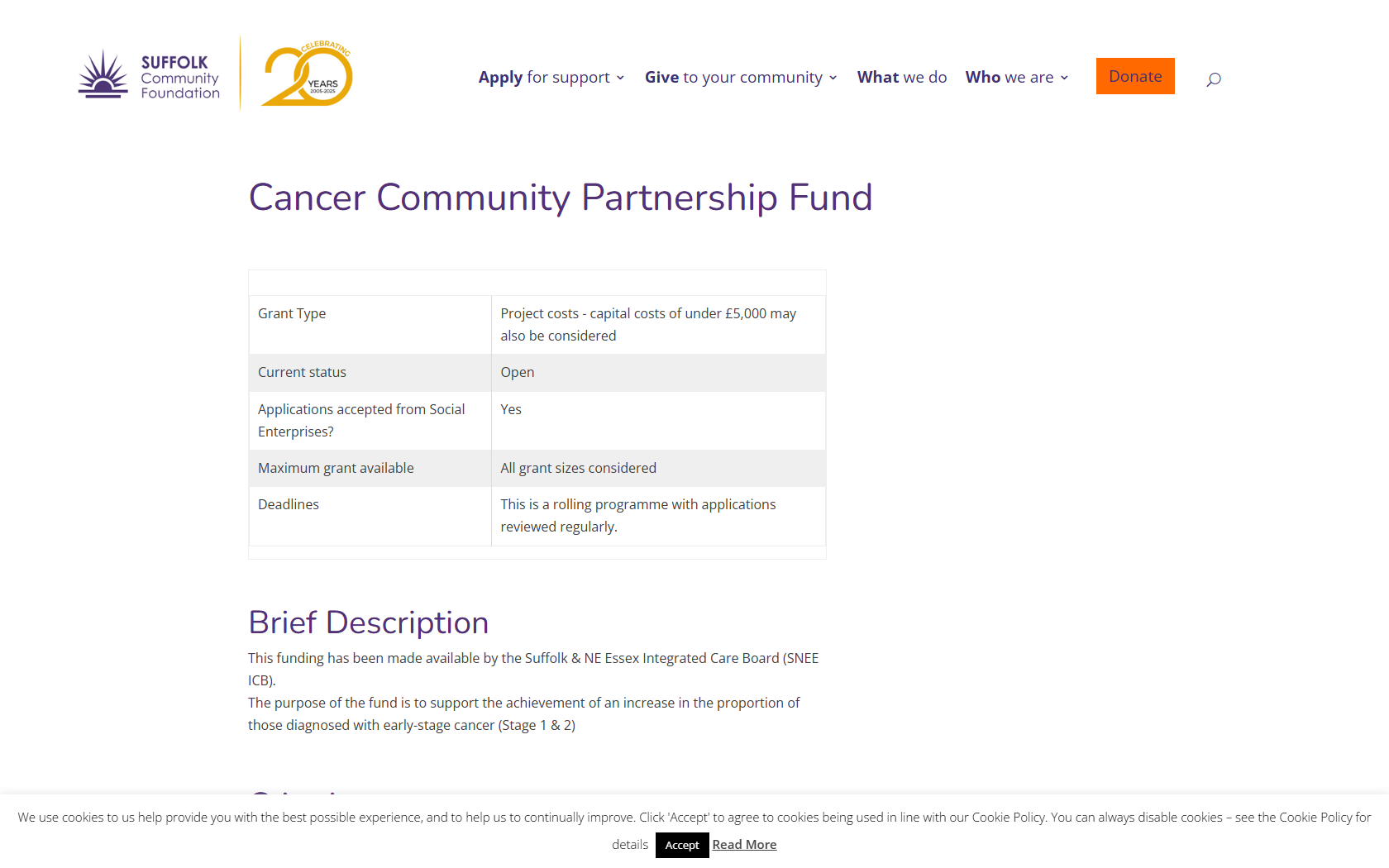
The Cancer Community Fund is a vital initiative designed to support grassroots organisations and community groups working to improve the lives of those affected by cancer. This fund provides financial assistance to projects that offer practical, emotional, and social support to individuals and families dealing with cancer, with a particular focus on underserved communities. By providing resources to local initiatives, the fund aims to enhance cancer care, promote awareness, and strengthen the support networks available to those in need.
About the Cancer Community Fund
The Cancer Community Fund is dedicated to empowering local communities and improving access to cancer-related services. The fund supports projects that focus on:
Cancer Awareness and Education: Initiatives that promote early detection, cancer prevention, and general health education in communities at high risk or with limited access to healthcare resources. Support Services for Patients and Families: Providing financial backing for organisations that offer counselling, support groups, transportation, and assistance with day-to-day tasks for individuals undergoing cancer treatment. Community-Led Health Initiatives: Funding projects that involve communities in the development of cancer-related services, including screening programmes and wellness initiatives. Innovative Solutions to Care: Encouraging the development of innovative approaches to supporting cancer patients, particularly those addressing the emotional and social challenges associated with the disease. Key Benefits of the Cancer Community Fund
Financial Support for Community Projects: The fund offers grants to organisations working on cancer-related projects that make a real difference in local communities. Empowering Underserved Communities: By focusing on grassroots initiatives, the fund ensures that underserved and high-risk communities have better access to cancer support services. Improved Quality of Life: The fund helps enhance the quality of life for individuals affected by cancer by supporting projects that provide practical assistance and emotional care. Building Awareness: Supporting educational initiatives that raise awareness of cancer prevention, early detection, and the importance of regular health check-ups. Eligibility Criteria for the Cancer Community Fund
To be eligible for the Cancer Community Fund, applicants must meet the following criteria:
Community Focus: The project must serve a local community and address the needs of individuals affected by cancer. This can include support services, education, or health initiatives. Non-Profit Organisations: The fund is primarily open to non-profit organisations, charities, and community groups that operate at a local or regional level. Clear Impact: The project should have a clear objective that addresses a specific need within the community, particularly in relation to cancer care, prevention, or support. Funding Opportunities
The Cancer Community Fund provides financial assistance to a wide range of cancer-related projects, including:
Support Programmes: Funding for support groups, counselling services, and initiatives that assist cancer patients and their families. Awareness Campaigns: Financial backing for campaigns that aim to raise awareness about cancer prevention, early detection, and available treatment options. Health and Wellness Projects: Grants for projects that promote healthy lifestyles, cancer prevention, and regular screening within communities. How to Apply for the Cancer Community Fund
To apply for the Cancer Community Fund, follow these steps:
Prepare a Detailed Proposal: Outline your project’s objectives, the community it serves, and the impact it aims to have on individuals affected by cancer. Ensure Eligibility: Confirm that your organisation and project meet the eligibility requirements for the fund. Submit Your Application: Applications can be submitted through the official grant application portal. Be sure to include all necessary documentation, such as the project budget, timeline, and expected outcomes. For further information on application guidelines and deadlines, visit the official Cancer Community Fund website or contact the fund administrators.
Making a Difference in Cancer Care
The Cancer Community Fund provides a crucial lifeline to local organisations working to improve the lives of individuals affected by cancer. By supporting innovative and community-focused projects, the fund plays an important role in enhancing the availability of cancer care and support services across the UK.
