_db33a8.png)


Grants
791 links
-
Funding opportunity: Farming Innovation Programme: feasibility round five
See the full opportunity details on the Innovation Funding Service.
UK registered businesses can apply for a share of up to £15 million for feasibility projects.
This funding is from the industry-led Research and Development Partnerships Fund, part of the Farming Innovation Programme.
Eligibility summary
This competition is open to collaborations only.
To lead a collaborative project your organisation must:
be a UK registered business, including sole traders and partnerships collaborate with other UK organisations -
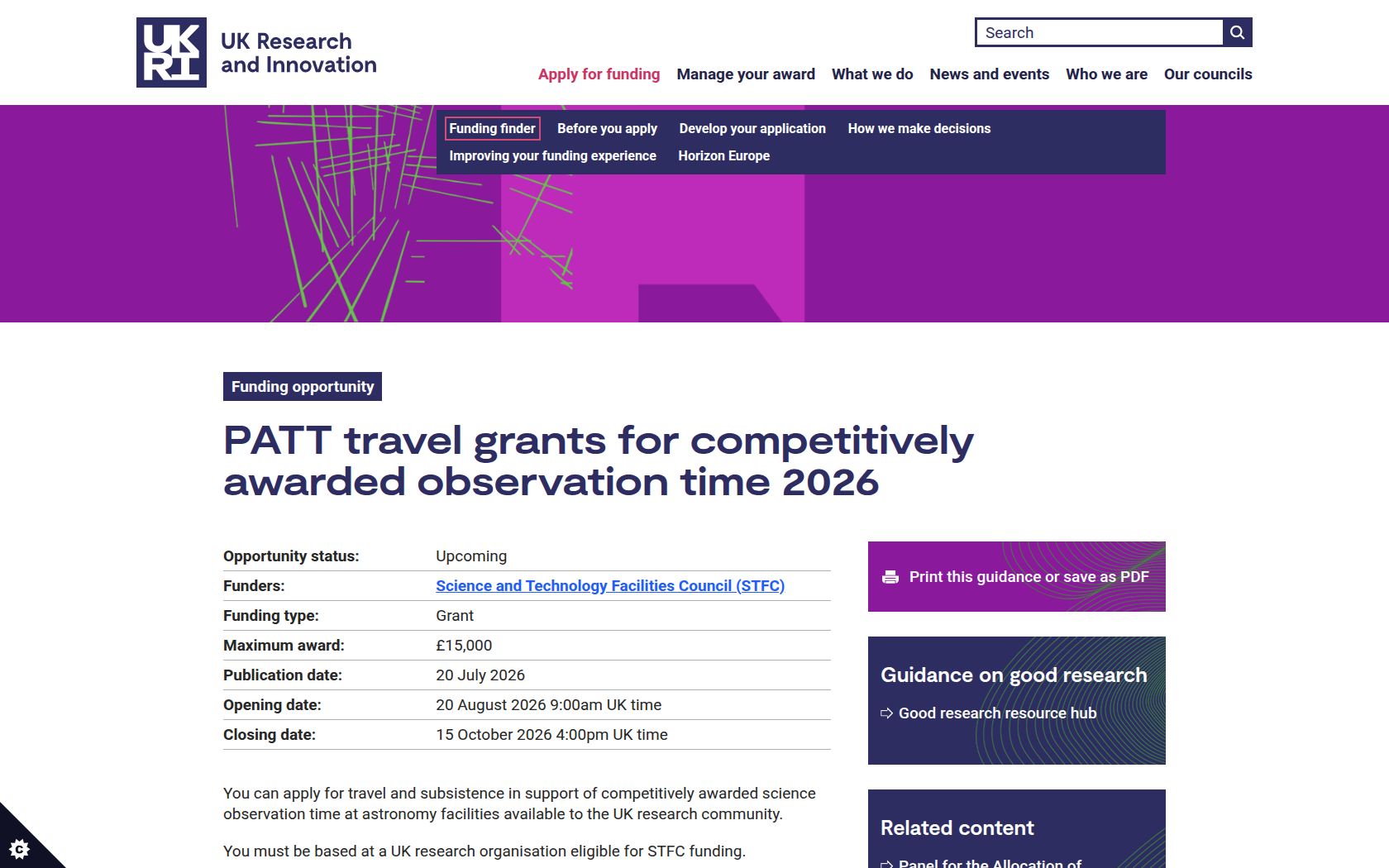
Funding opportunity: PATT travel grants for competitively awarded observation time 2026
You can apply for travel and subsistence in support of competitively awarded science observation time at astronomy facilities available to the UK research community.
You must be based at a UK research organisation eligible for STFC funding.
You can apply for:
travel grants: funding for groups with travel costs of more than £7,500 a year (application deadline in October each year) travel claims: for applicants who neither hold nor have access to a travel grant awarded by the panel (no deadline) For further details of travel claims, see the ‘Related opportunities’ section.
STFC will fund 100% of the full economic cost.
-
Funding opportunity: Collaborate with the UK Human Functional Genomics Initiative
Apply for an Academic and Industry Partnership award as part of the UK Human Functional Genomics Initiative’s (FGx) Innovation and Collaboration fund. The awards will enable the development of links between industrial partners and the FGx.
These awards can be used to support feasibility, pilot or initial studies to provide preliminary experiments to explore ideas and generate initial data which could support the development of competitive collaborative grant proposals for longer term projects.
You must be based at a UK research organisation to be eligible for this funding.
-
Funding opportunity: 2513: Advanced Connectivity Technologies: New Innovators
See the full opportunity details on the Innovation Funding Service.
UK registered micro and small businesses can apply for a share of up to £500,000 to develop affordable, adoptable and investable innovations in Advanced Connectivity Technologies. This funding is from the Department for Science, Innovation and Technology.
Eligibility summary
This competition is open to single applicants only.
To lead a project your organisation must be a UK registered micro or small business.
-

Funding opportunity: UKRI Translation: MRC Impact Acceleration Awards
Apply to the MRC Impact Acceleration Award for single-step support in developing a new or repurposed medicine, medical device, diagnostic, or other medical product.
Projects must target a high-risk development step backed by prior funding, generating critical data to de-risk onward progression or determine failure.
The Impact Acceleration Award strategically bridges the smaller Impact Acceleration Account (IAA) and the larger Proof of Concept funding opportunity.
You must be based at a Medical Research Council (MRC) eligible research organisation.
This funding opportunity was formerly known as ‘Gap Fund: single-step support for medical product development’.
-
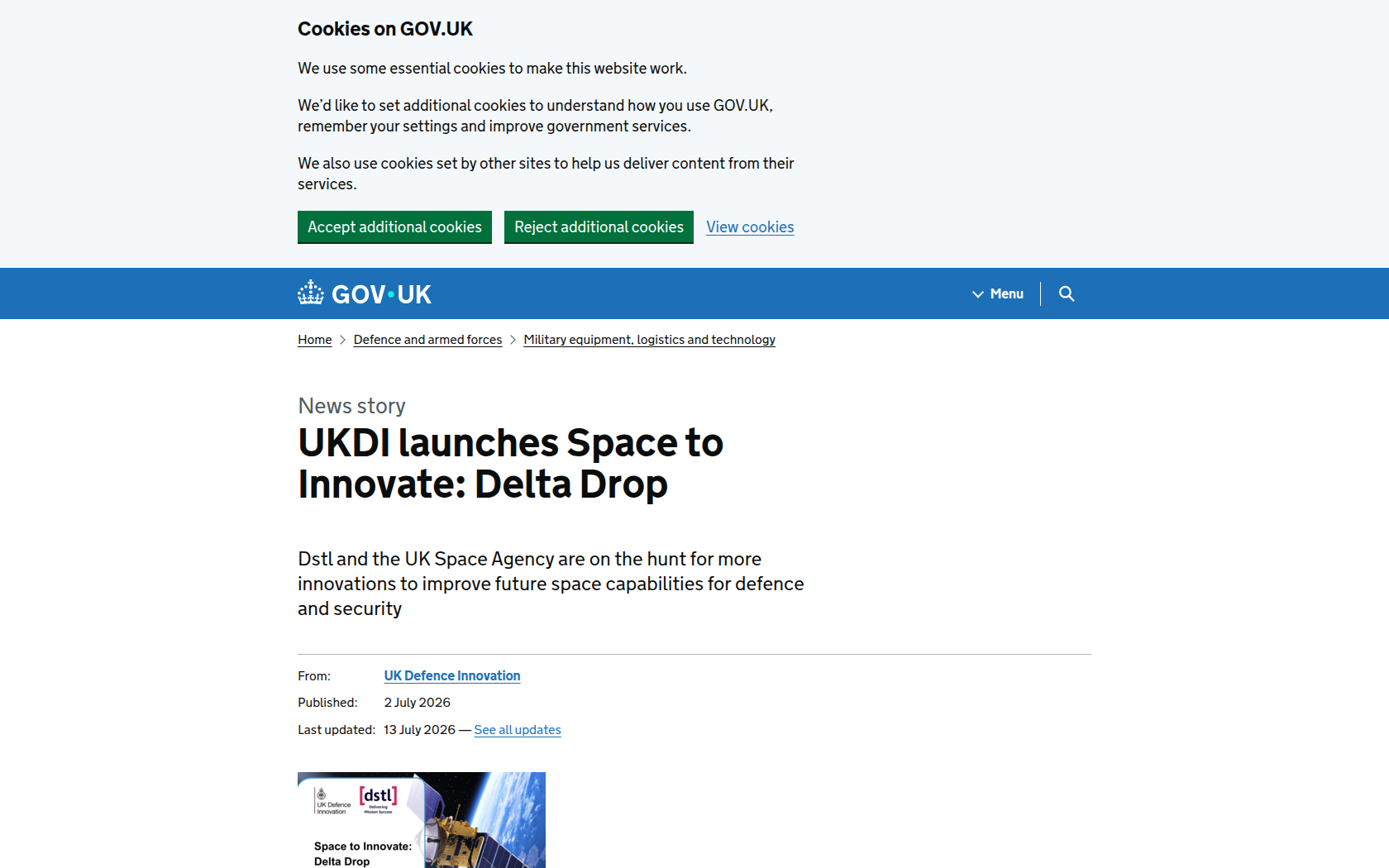
Up to £900,000 for Defence & Space Technology Innovation
UK organisations developing cutting-edge space technologies can now apply for funding through UK Defence Innovation's (UKDI) Space to Innovate: Delta Drop competition. Delivered in partnership with the UK Space Agency and Dstl, the programme is seeking innovative solutions that can strengthen the UK's future defence and security capabilities in space.
Successful applicants could receive:
A share of up to £900,000 in funding
Support for projects lasting up to 18 months
Funding for technologies at Technology Readiness Levels (TRL) 3–6
Access to defence and space innovation networks
Opportunities to contribute to future UK defence and government space capabilities.
The competition is focused on three challenge areas:
Enhanced sensor-to-response capabilities for Space Domain Awareness (SDA), Intelligence, Surveillance and Reconnaissance (ISR), and communications missions
Self-protecting space platforms capable of defending themselves against emerging threats
Resilience against ground-based electromagnetic threats affecting space systems and infrastructure.
Since the launch of the original Space to Innovate programme in 2021, more than £4.2 million has been awarded to 19 organisations to develop novel technologies that provide the UK with a strategic advantage in the space domain.
Stage 1 Deadline: 28 July 2026
Stage 2 Deadline (invitation only): September 2026
-

Up to $1.56 Million for US Technology Startups
The US National Science Foundation’s SBIR/STTR programme, also known as America’s Seed Fund powered by NSF, is offering funding to startups and small businesses developing high-risk, high-impact technologies with strong commercial potential.
The programme supports research and development across almost every technology area and market sector, helping businesses transform scientific discoveries and early-stage innovations into commercially viable products and services. NSF does not take equity, meaning successful businesses retain full ownership of their company and intellectual property.
Funding available includes:
Up to $305,000 through Phase I for projects lasting approximately 6–18 months
Up to $1.25 million through Phase II for eligible previous Phase I awardees
Up to approximately $1.56 million through the Fast-Track programme
Funding for technical research and development activities
Opportunities to strengthen commercial readiness, customer engagement and intellectual property
Potential follow-on and supplementary funding for successful projects
The programme is open to qualifying US small businesses with no more than 500 employees, including affiliated companies. STTR applicants must also work with an eligible not-for-profit research institution. New Phase I and Fast-Track applicants must first submit a Project Pitch and receive an official invitation before submitting a full proposal.
Projects are assessed on their:
Intellectual merit and technological innovation
Potential benefits for society and the wider economy
Commercial potential and ability to address an unmet market need
🇺🇸 Contribution to US competitiveness, economic growth and national security
deadline: 27 July 2026 at 5:00pm, based on the submitting organisation’s local time
-

Up to £475,000 for Support Services for Women in the Criminal Justice System
Charities, social enterprises and voluntary sector organisations can now apply for funding through the Women's Diversionary Activity Grant, a major Ministry of Justice initiative designed to help women move away from further involvement in the criminal justice system and reduce the number entering custody. The fund will support gender-specific, trauma-informed services that address the underlying causes of offending and reoffending.
Successful applicants can receive:
Grants ranging from £60,000 to £475,000
Multi-year funding from January 2027 to March 2029
Support for specialist interventions delivered by charities, social enterprises and consortiums
Funding across 12 regional lots throughout England and Wales
Long-term investment to strengthen women's community services and diversion programmes.
The fund is looking to support organisations providing:
Housing and homelessness support
Employment, training and financial advice
Mental health and wellbeing services
Substance misuse support
Domestic abuse and violence against women services
Family, parenting and relationship support
Gender-specific, trauma-informed interventions that help women avoid further contact with the criminal justice system.
Eligible applicants must be registered charities, exempt charities, social enterprises, or consortiums delivering services on a not-for-profit basis. The overall programme represents approximately £25.6 million of investment into women's services.
📅 Application Deadline: 24 July 2026 (10:00am)
-
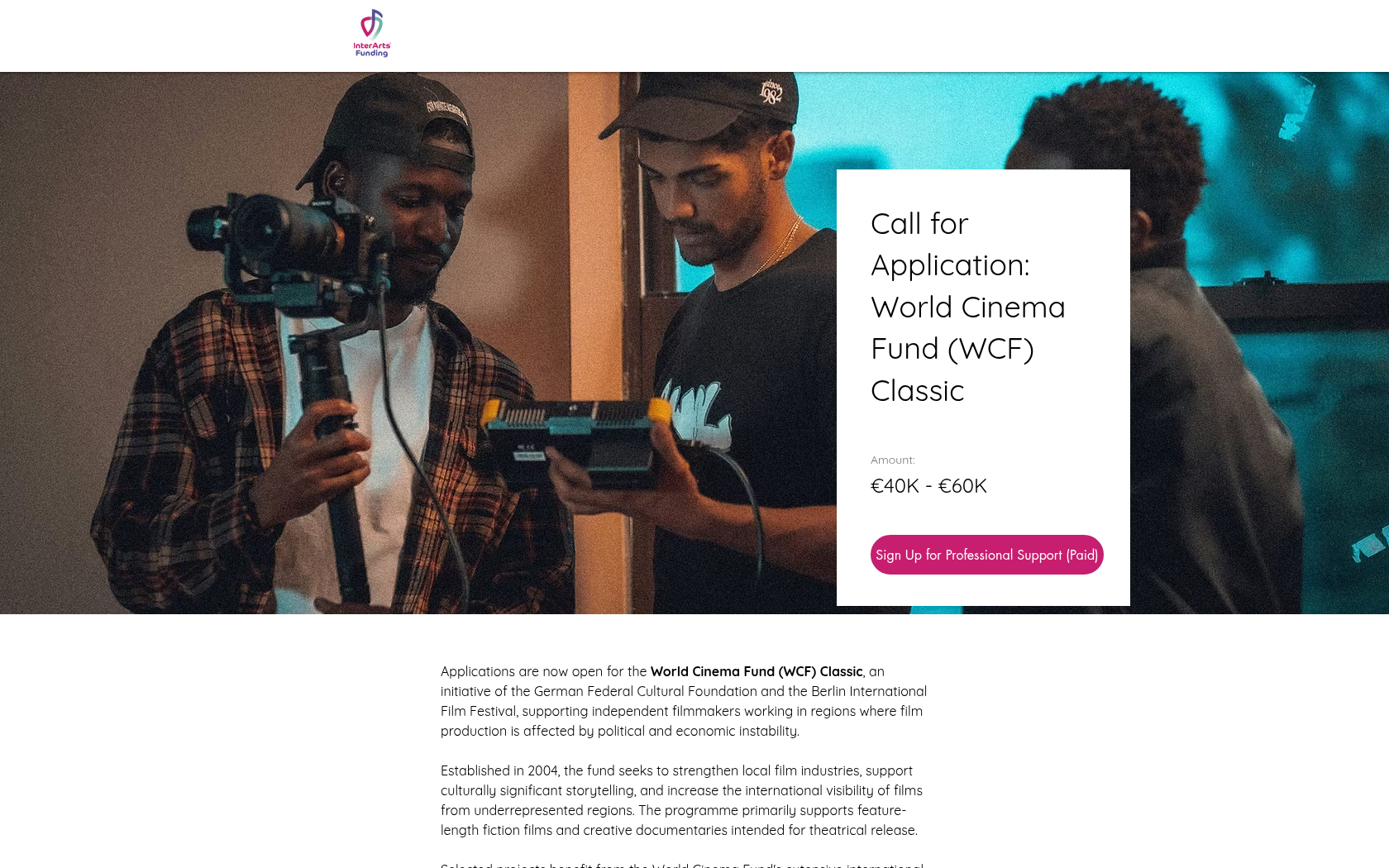
Up to €100,000 Funding for Independent Feature Film Productions
Filmmakers and production companies working in regions with limited film industry infrastructure can now apply to the World Cinema Fund (WCF) Classic 2026. Supported by the Berlinale, the programme helps bring distinctive, culturally rooted stories to the screen by providing production and post-production funding for feature-length films with strong artistic vision.
Successful projects can receive:
Up to €60,000 for production funding
Up to €40,000 for post-production funding
International recognition through the World Cinema Fund network
Support for feature-length fiction and documentary projects
Opportunities to connect with global film industry partners and festivals
The fund is aimed at projects being developed in regions where film industries face structural challenges, including parts of:
Latin America and the Caribbean
Africa and the Middle East
Central, South and Southeast Asia
The Caucasus and other underrepresented filmmaking regions
Projects should demonstrate:
A strong artistic and cultural vision
Authentic storytelling rooted in local communities and cultures
Potential for international festival and cinema audiences
Contribution to cultural diversity in global cinema
Application Deadline: 24 July 2026 (23:59 CEST)
-
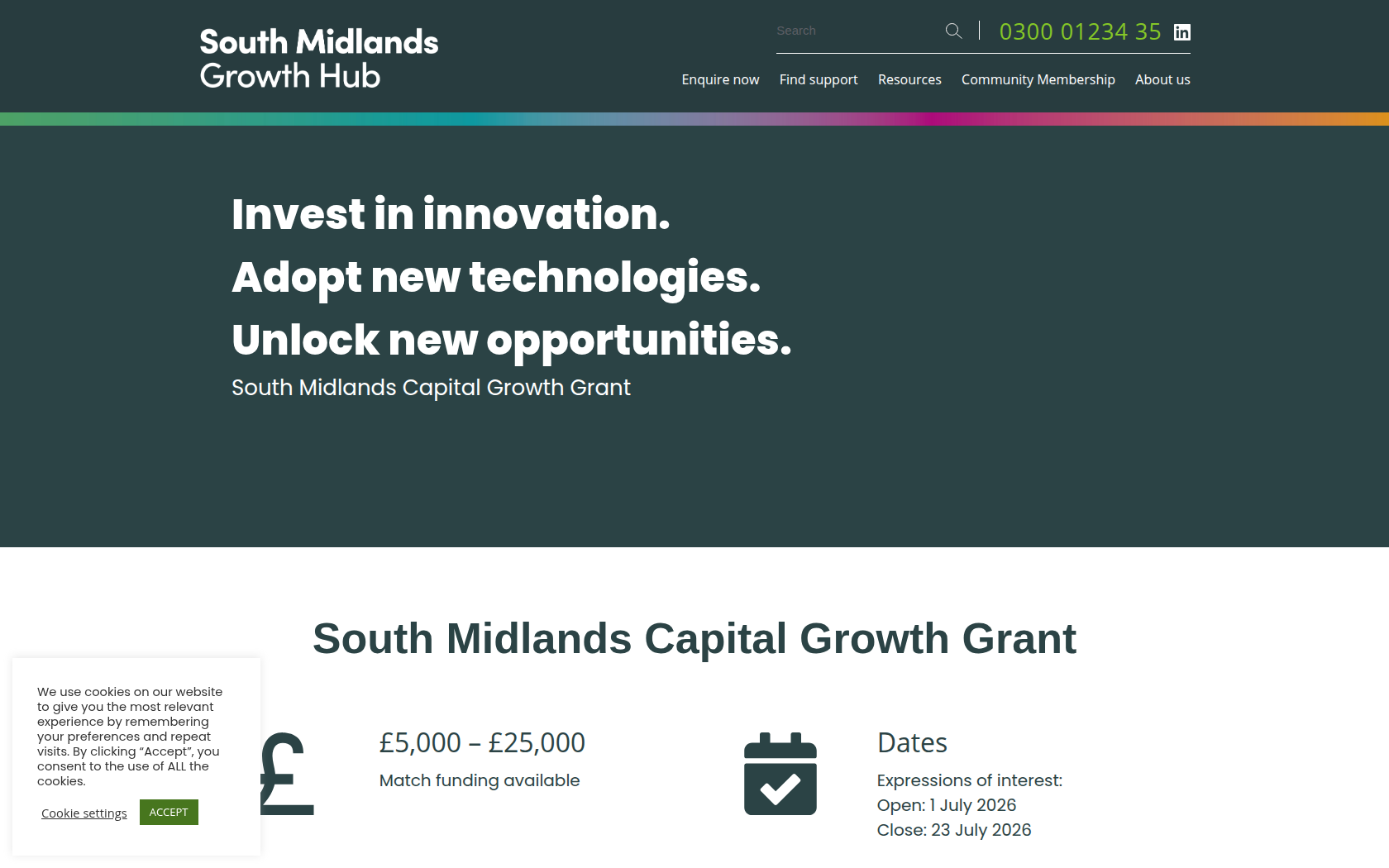
Up to £25,000 for SME Growth & Innovation
Small and medium-sized businesses across the South Midlands can now apply for funding through the South Midlands Growth Grant, designed to help businesses invest in innovation, sustainability, technology adoption and growth-focused projects. The programme aims to support ambitious SMEs looking to strengthen their operations, create jobs and improve productivity.
Successful applicants can receive:
Grants ranging from £300 to £50,000
Funding covering up to 50% of eligible project costs (match funding required)
Support for capital investment projects and business expansion
Funding for sustainability, decarbonisation and green initiatives
Investment in innovation, new technologies and productivity improvements
The programme is looking to support projects that:
Drive business growth and create employment opportunities
Introduce new technologies, equipment or processes
Improve environmental performance and sustainability
Increase innovation and competitiveness
Strengthen long-term business resilience and productivity
Eligible applicants must be SMEs operating within the South Midlands region and able to provide the required match funding contribution. Applications begin with an Expression of Interest (EOI) through the South Midlands Growth Hub.
-

£200,000 - Darwin Initiative
We are thrilled to announce that applications for Darwin Initiative Round 32 are now open.
The aim of the Darwin Initiative is to support communities to find just, scalable, and sustainable ways to conserve and restore nature while growing their economies and reducing poverty. Darwin Initiative grants enable real impact on the ground. Since 1993, the Darwin Initiative has invested over £289 million in more than 1,370 projects. These grants have empowered communities to more sustainably manage millions of hectares of precious natural habitats. These landscapes, from ancient forests and vital peatlands to rich ocean ecosystems, shelter endangered wildlife, lock away carbon, and help secure the food we all depend on. Darwin Initiative grants have also enabled more than 100,000 people to improve their resilience to natural disasters and climate change, including communities in some of the world’s poorest countries.
Putting these numbers into context, one current Darwin Initiative project in Indonesia is enabling large-scale conservation across West Papua’s globally important land- and seascapes. Communities and authorities now manage over 1.3 million hectares of biodiverse forests and fisheries more effectively and have achieved UNESCO designation of a 12.6-million-hectare Biosphere Reserve – boosting the global profile of Indonesia’s biodiversity and embedding nature into regional planning and development.
-

SGP CSO Challenge Program
Proposals are selected through an inclusive and transparent, two‑stage review process. Applicants first submit a Concept Note. Shortlisted applicants are then invited to submit a Full Proposal.
Selected winners receive direct funding and full program support, while finalists receive recognition and access to capacity‑building support.
A diverse Program Selection Committee, comprised of GEF Secretariat, representatives of civil society, Indigenous Peoples, youth, and women's organizations, and IUCN, will select winning and finalist CSOs from among proposals received.
-

Dana Foundation Grants Programme 2026
Applications are now open for the Dana Foundation Grants Programme 2026, offering up to €150,000 in flexible funding to support locally led organizations working to address multidimensional poverty and drive sustainable community impact.
This program is designed to empower grassroots organizations with long-term, unrestricted funding, enabling them to implement scalable, community-driven solutions.
The Dana Foundation Grants Programme focuses on supporting locally led, evidence-based initiatives that tackle interconnected social and economic challenges.
The program adopts a trust-based philanthropy approach, prioritizing flexibility, reduced administrative burden, and long-term partnerships with grantees.
Rather than funding short-term projects, the initiative supports organizations holistically, allowing them to respond to evolving community needs and scale their impact sustainably.
-
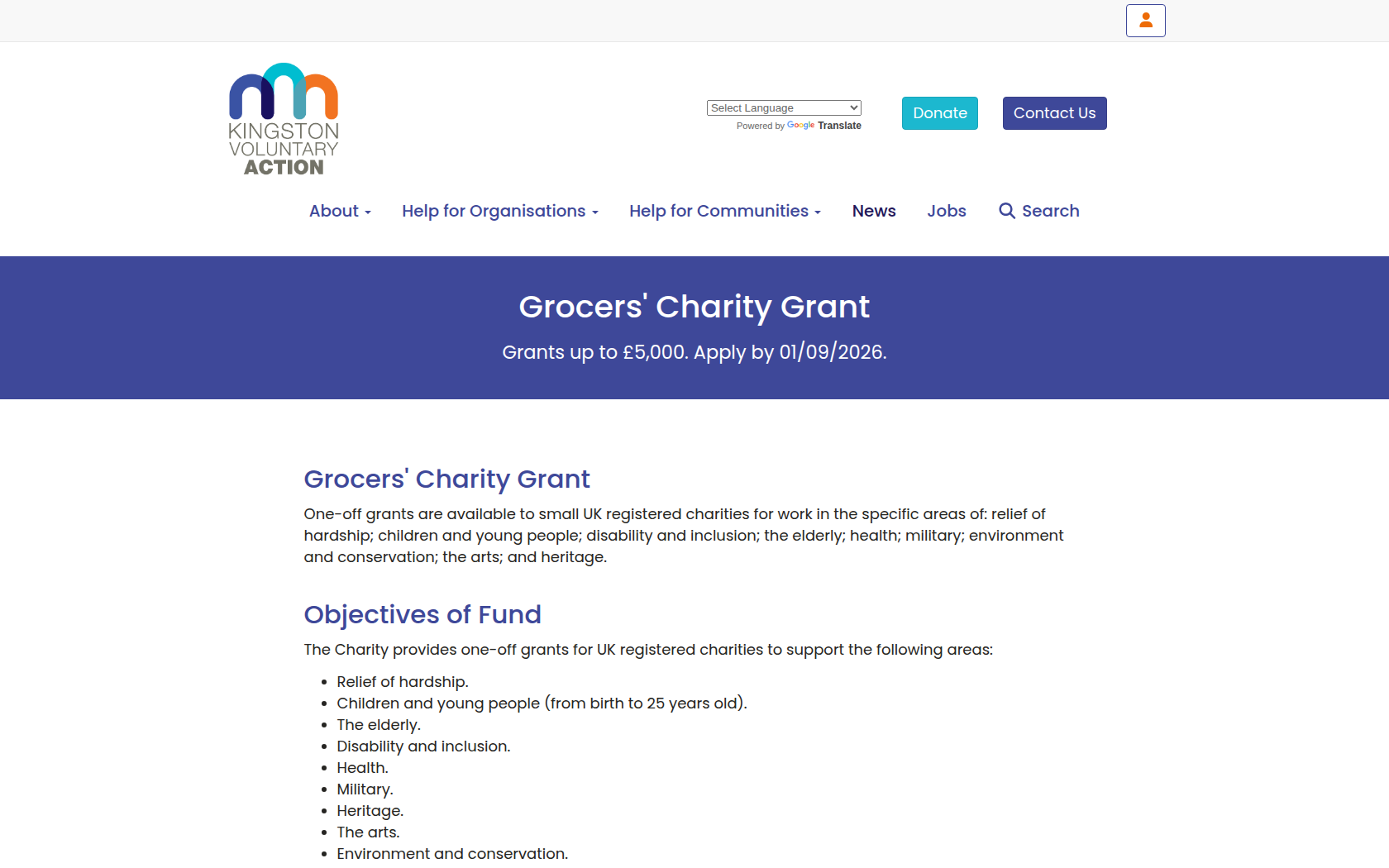
Grocers' Charity Grant
One-off grants are available to small UK registered charities for work in the specific areas of: relief of hardship; children and young people; disability and inclusion; the elderly; health; military; environment and conservation; the arts; and heritage.
-

The Sky Is Not The Limit Social Impact Grant
Our flagship annual grant, in partnership with Business Takeout, provides comprehensive design and branding support to one mission-driven organization each year — at no cost. From brand identity to digital strategy, we deliver up to $10,000 in world-class creative services.
-

DeepTech Catalyst Bio Expression of Interest
The DTC Bio is an incubator programme for early-stage biotechnology start-ups, providing access to a number of UKRI campuses: Sci-Tech Daresbury, Rothamsted Enterprises and AberInnovation, with additional specialist support available from The Pirbright Institute. The DTC Bio provides £50k of R&D funding, a £10k innovation voucher for R&D activity, and technical, commercial and IP protection support to help start-ups de-risk their technologies and get to market faster. The programme also provides networking opportunities and introductions to investors, customers, and key sector stakeholders.
The DTC Bio supports UK-registered companies under 5 years old that are majority-owned by founders and employees and can demonstrate that they are beyond the concept stage of their product and commercial development.
We can only accept applications from companies who have previously received at least one of the following:
UK Research and Innovation (UKRI) grant funding to support the research underpinning the product or service,
Innovate UK or other UKRI commercialisation grant to take forward the bioscience innovation to address a market opportunity,
Support (financial and/or in-kind) from a UKRI-supported accelerator or pre-incubation programme.
-

Next Wave: Breakthrough Wave 1
Innovate UK, part of UK Research and Innovation (UKRI), will invest up to £10 million in successful applicants in this competition. This is subject to a sufficient number of high quality applications being received.
The aim of this competition is to support early stage innovation in the intersection of high growth potential Createch and the Industrial Strategy Frontier industries. This funding is to develop innovations beyond proof of concept, de-risking future investment and supporting long term sector growth.
In applying to this competition, you are entering into a competitive process. This competition has a funding limit, so we may not be able to fund all the proposed projects. It may be the case that your project scores highly but we are still unable to fund it.
Our experience from similar competitions suggests that you could have 10% chance of success.
We consider a range of factors when determining whether to provide funding to applicants. This includes an assessment of prior conduct, such as any outstanding payments owed to Innovate UK or UKRI. Such factors may influence the funding decision, potentially resulting in a refusal of funding or an award subject to additional scrutiny.
We also reserve the right to adjust funding allocations for any of our competitions. This may be in response to changes in policy, portfolio funding considerations or broader government funding decisions.
This competition closes at 11am UK time on the deadline stated in this Innovate UK competition brief. We cannot guarantee other government or third party sites will always show the correct competition information.
-

lululemon Gives
The Community Wellbeing Grant is lululemon Gives’ annual, application-based grant program. Since its inception in 2016, we have invested in community resilience by supporting organizations that are creating inclusive access to wellbeing practicesOur goal is to provide funding to community-led charitable organizations that remove barriers to wellbeing for their communities through movement programming. We aim to provide philanthropic resources to organizations that may not traditionally have access to them and welcome new organizations to our lululemon community every year.
The Community Wellbeing Grant is a one-year grant program. In addition to funding, we provide optional offerings throughout the grant cycle to support grant recipients’ individual and organizational wellbeing.
Organizations can apply for up to $50,000 USD, which should not exceed 40% of their most recently completed fiscal year’s operating budget. If selected, the grant will be disbursed through and administered by our Donor-Advised Fund at Charities Aid Foundation America (CAFA). Please note that grant recipients operating in China Mainland will be funded directly from lululemon China.
-
The Next Gen Giving Circle
What We Fund and Why
Not everyone starts from the same place. Some people have access to loans, homeownership, good jobs, and the tools to build financial security. A lot of people don't - and that's not by accident. Decades of policy decisions, systemic exclusion, and racial and economic injustice have kept entire communities locked out of wealth-building opportunities. The pandemic made all of it worse.
NGGC exists to fund the organisations working to change that.
This Year's Focus: Housing Justice
Starting in 2026, we're narrowing our focus to one area of economic justice each year. We heard from previous applicants that a clearer funding focus would help them write stronger applications and help us fund more effectively. So that's what we're doing.
This year, our members chose housing justice.
Housing is where economic justice hits hardest. If you can't afford a stable place to live, nothing else works - not your job, not your health, not your kids' education. Drawing on the Urban Institute's framework, we see housing justice as inseparable from economic justice: everyone deserves housing that supports their health, stability, and ability to build a future.
The kind of work we're looking to fund includes things like tenant organising and renter protections, eviction prevention, affordable housing advocacy, supporting people experiencing homelessness, cooperative housing models, increasing homeownership rates, and addressing the legacy of redlining and Indigenous land theft through reparations, landback, or other measures. That list isn't exhaustive - if your work advances housing justice in the Greater Washington region, we want to hear about it.
Who Can Apply
Your organisation must have an annual budget of $750,000 or less, have been operating for at least one year, and work with historically under-resourced communities in the Greater Washington region (DC metro area, including Prince George's and Montgomery Counties in Maryland and Northern Virginia). You can be based elsewhere as long as the funded work serves communities in this region.
You can apply for coalition or partnership work. The grants are general operating funds - use them to sustain what's already working or to pilot something new.
Timeline
Applications open: June 1, 2026
Applications close: July 31, 2026 at 11:59 PM ET
Eligibility decisions: within two weeks of submission
All applicants notified: by September 30, 2026
Finalist meetings with NGGC members: October 2026 (virtual)
Final grant decisions: November 2026
Funds disbursed: before end of December 2026
Want to check whether your organisation is a good fit before applying? Sign up for a 15-minute one-to-one chat with a Giving Circle member. We'd rather help you figure that out before you spend time on an application than reject you after.
-
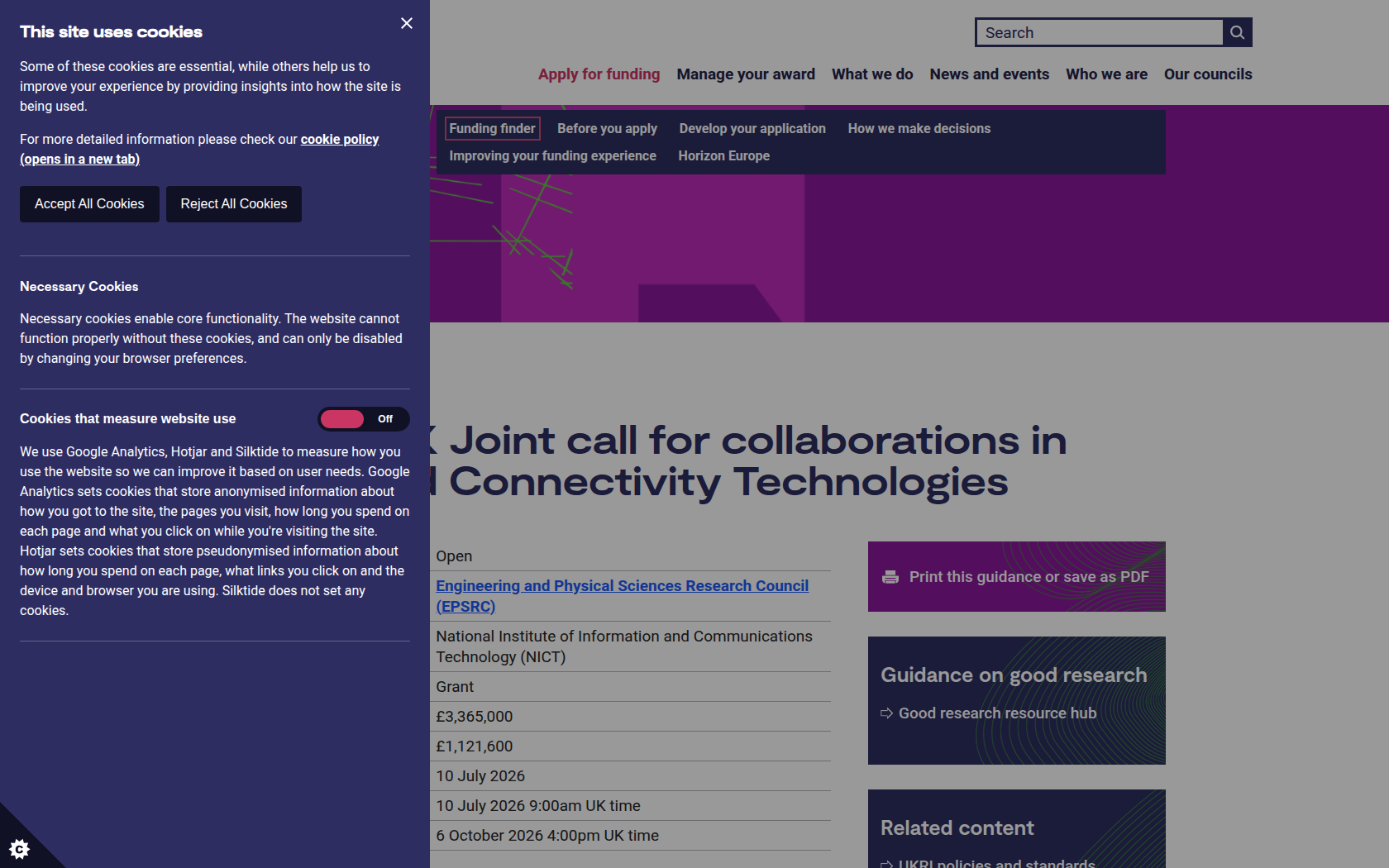
Funding opportunity: Japan-UK Joint call for collaborations in Advanced Connectivity Technologies
Apply for funding to form world‑leading partnerships with collaborators in Japan in the field of Advanced Connectivity Technologies.
Your application must involve researchers from both Japan and UK.
UK applicants must be based at a UK research organisation eligible for EPSRC funding. Japanese applicants must be eligible for NICT funding.
You may request up to £897,000 (80% full economic cost (FEC)) for the UK component from EPSRC and up to ¥200 million for Japan components from NICT.
The duration of the award can be up to a maximum of three years.
If you intend to submit a joint UK-Japan proposal to this funding opportunity, it is strongly encouraged to submit an Expression of interest.
-
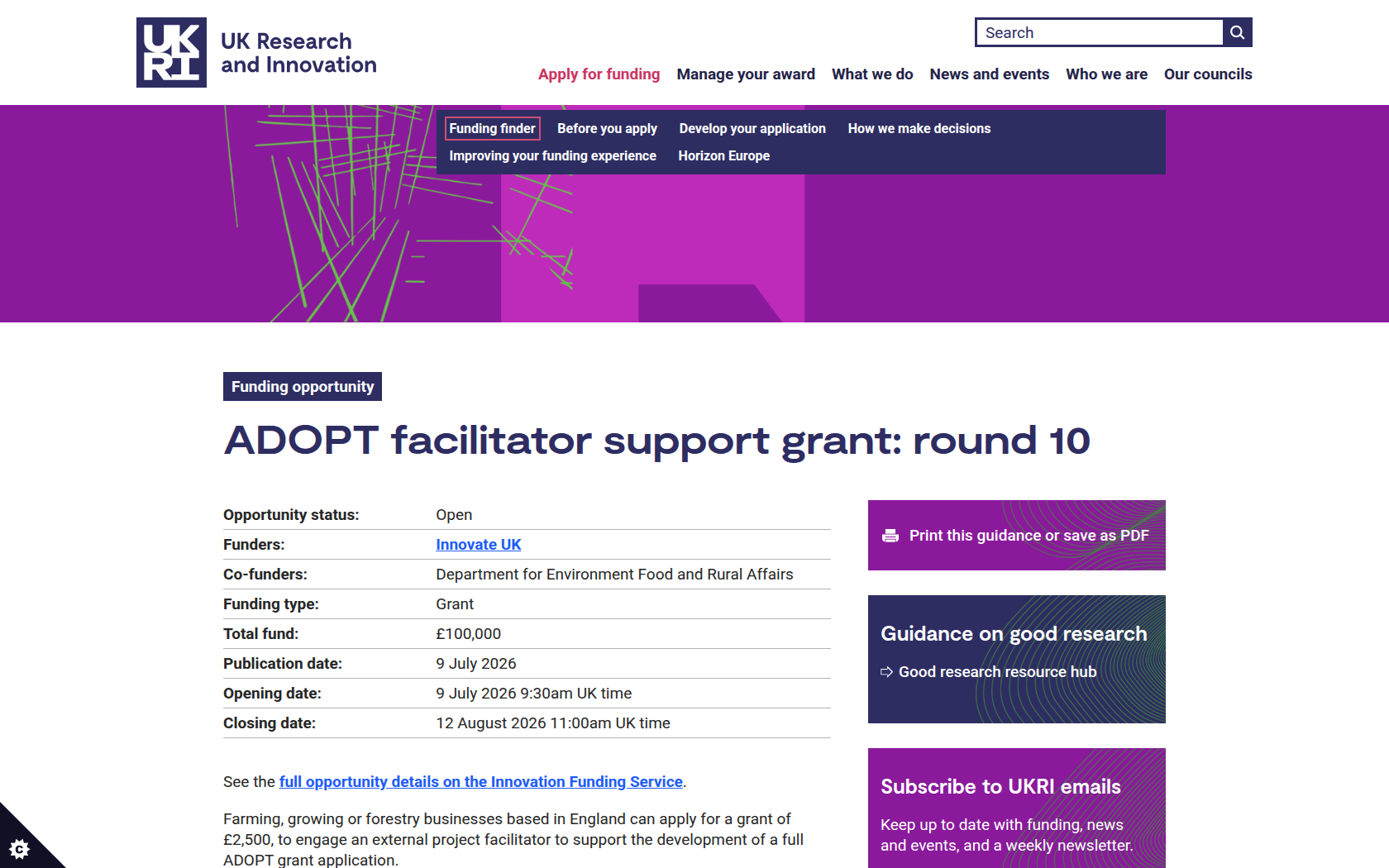
Funding opportunity: ADOPT facilitator support grant: round 10
See the full opportunity details on the Innovation Funding Service.
Farming, growing or forestry businesses based in England can apply for a grant of £2,500, to engage an external project facilitator to support the development of a full ADOPT grant application.
Eligibility summary
This competition is open to single applicants only.
To apply for this grant your organisation must:
be an active farming, growing or forestry business of any size based in England be able to evidence that you are an established business, including sole traders and partnerships have a UK bank account -
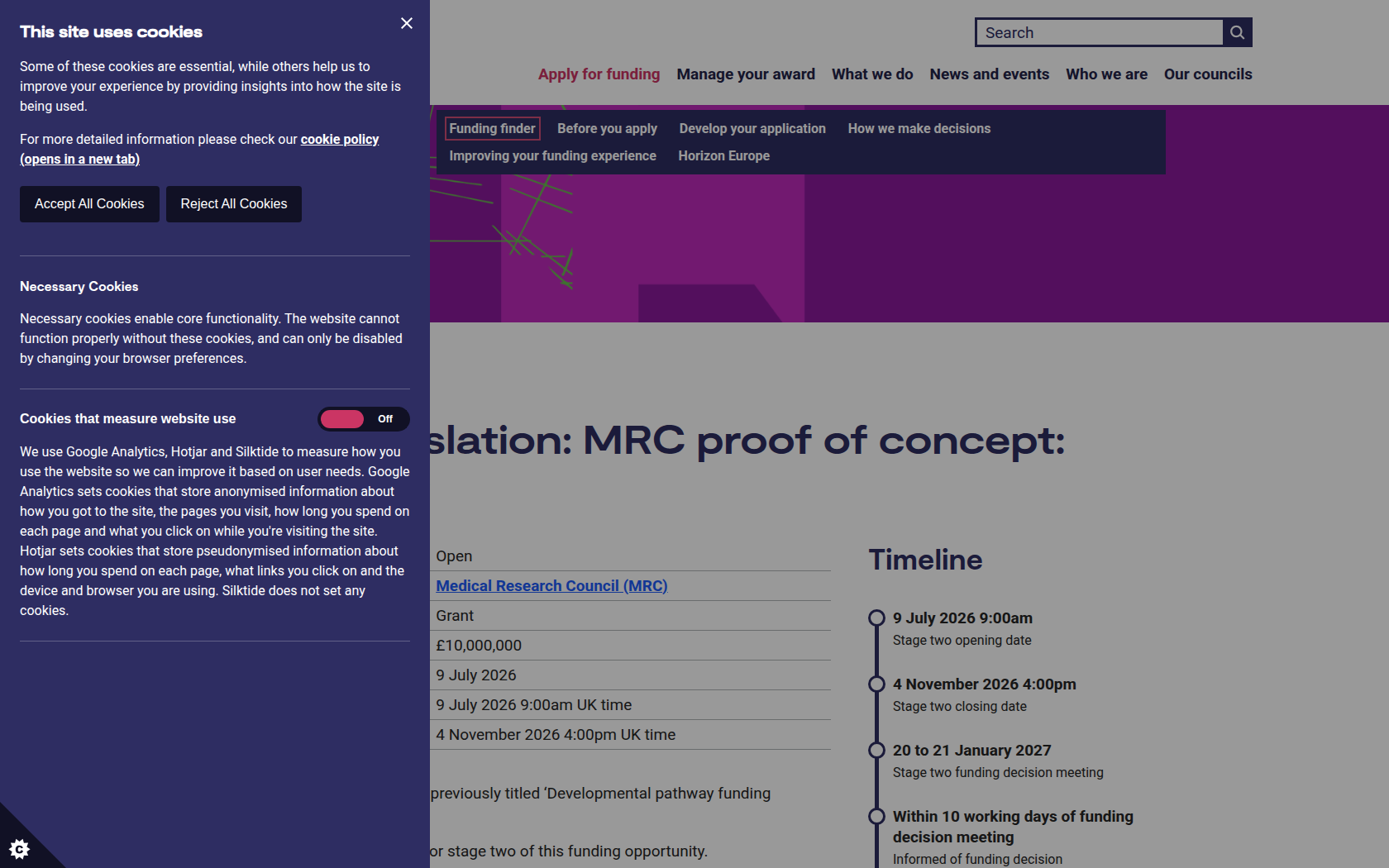
Funding opportunity: UKRI translation: MRC proof of concept: stage two
This funding opportunity was previously titled ‘Developmental pathway funding scheme: stage two’.
You must be invited to apply for stage two of this funding opportunity.
Apply for funding to develop and test novel therapeutics, medical devices, diagnostics and other interventions across any stage of the developmental pathway, from prototype development, through pre-clinical refinement, to early-phase clinical studies (up to phase 2a).
There is no funding limit but requested costs should be appropriate to the project. We usually fund 80% of a project’s full economic cost (FEC).
-

Funding opportunity: Computing resources on the STFC DiRAC HPC facility (RAC19)
Apply for computing resources on the STFC DiRAC High Performance Computing (HPC) facility: Resource Allocation Committee (RAC) 19th opportunity.
DiRAC offers computing resources on the following systems:
Data Intensive Service at Cambridge Data Intensive Service at Leicester Extreme Scaling Service at Edinburgh Memory Intensive Service at Durham You must be based at a UK research organisation to be eligible to apply.
Successful awards will begin on 1 April 2027.
Short proposals can be for up to one year.
Thematic proposals can be for up to three years.
You may apply for up to 80% of the available resources, including storage.
-
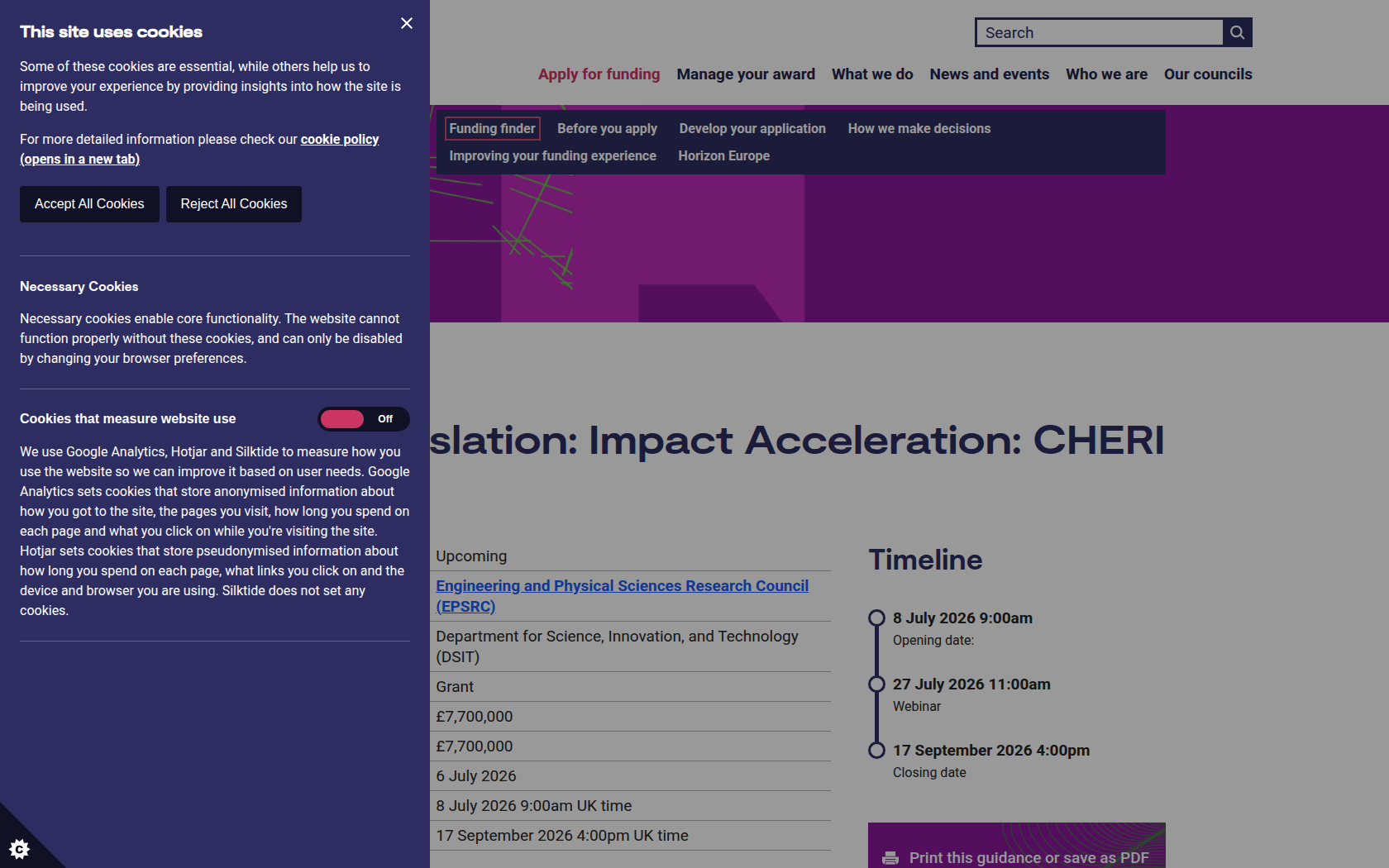
Funding opportunity: UKRI Translation: Impact Acceleration: CHERI IKC
Apply for funding to establish an Innovation and Knowledge Centre (IKC) focused on driving adoption of the Capability Hardware Enhanced RISC Instructions (CHERI) security by design technology.
The aim is to build critical mass towards commercialisation of CHERI technologies. The IKC will work with business and industry to support the transition CHERI from research to commercial readiness and promote deployment.
You must be based at a UK research organisation eligible for EPSRC funding.
The full economic cost (FEC) of your project can be up to £7,700,000. EPSRC will fund 80% of the FEC.
Funding can be requested for activity up to 31st March 2030.
-

Funding opportunity: UKRI Translation: MRC Proof of Concept: stage one
This funding opportunity was previously titled ‘Developmental pathway funding scheme: stage one’. Ensure you apply to the correct scheme, as similarly titled UKRI opportunities exist.
Apply for funding to develop and test novel therapeutics, medical devices, diagnostics and other interventions across any stage of the developmental pathway, from prototype development, through pre-clinical refinement, to early-phase clinical studies (up to phase 2a).
You must be based at a research organisation eligible for Medical Research Council (MRC) funding.
There is no funding limit but requested costs should be appropriate to the project.